
Living aboard Orion
On this page
Are you an avid camper? Or maybe you prefer van life? If glamping is your thing, though, perhaps you wouldn't enjoy time aboard the Orion spacecraft! The Artemis II mission took Canadian Space Agency (CSA) astronaut Jeremy Hansen and his three NASA crewmates in a campervan-sized capsule for a nearly 10-day journey around the Moon. And unlike camping on Earth, you can't take a hike if you get a little tired of your fellow campers! Thankfully, the crew was able to stow Christina Koch's and Jeremy's seats until the day of return, giving them more room to move around during the flight. The backs of the commander and pilot seats remained out, but their foot pans were stowed.
In this vlog, CSA astronaut Jeremy Hansen explains how he and the other Artemis II crewmembers will manage meals during their nearly 10-day trip around the Moon. (Credits: CSA, NASA, Fulwell 73 UK Limited)
Transcript of the video entitled Vlog 20: Eating in space during the Artemis II lunar mission
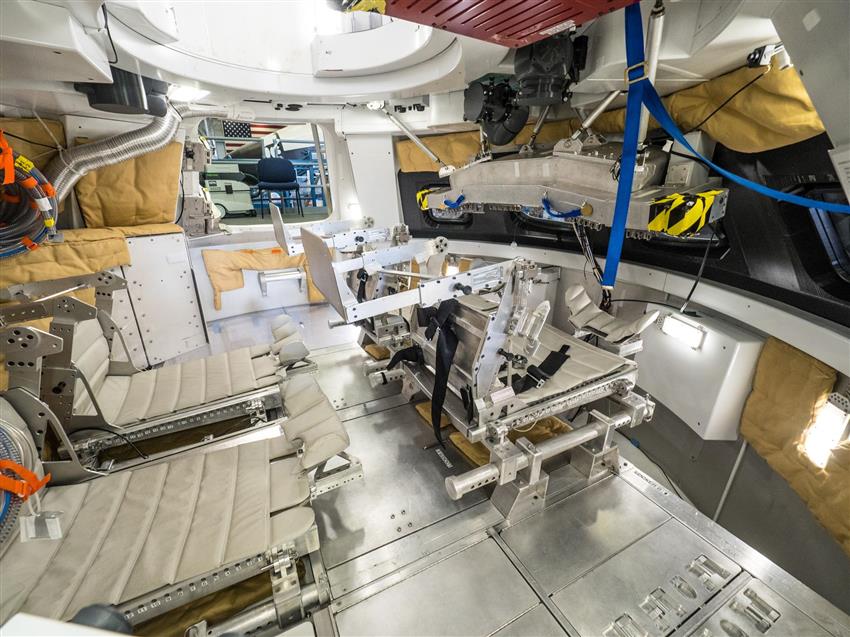
A view of the interior of the Orion spacecraft medium-fidelity mockup used for astronaut training and systems familiarization at NASA's Johnson Space Center in Houston. (Credit: NASA)
Artemis II was a test flight to help prepare for future lunar missions. The crew tested the systems and procedures, but also refined techniques for everything that pertains to life in space: eating, sleeping, staying clean, exercising, and communicating with the ground while they were on Orion.

Text version - Life aboard Orion – infographic
The four Artemis II astronauts lived in a campervan-sized capsule for nearly 10 days. What was life aboard Orion like? How did they take care of their basic needs? (Credit: CSA)

Text version - Working aboard Orion – infographic
What were CSA astronaut Jeremy Hansen and his Artemis II crewmates doing during their lunar journey? They worked, observed Earth and the Moon, conducted science and communicated with the ground! (Credit: CSA)
Eating in a capsule
Before the Artemis II astronauts went to space, NASA and CSA experts worked with them to create a balanced menu for the mission. They choose meals based on nutritional value to meet basic needs, but also based on astronauts' personal tastes.
Given the limited space available on Orion though, there were a number of limitations when it came to food and beverages. For example, while there was a food warmer aboard, it had limited capacity - so the crew ate most of its food… at room temperature! Some food allowed on the ISS was not available on Orion, like canned food because it is too heavy and bulky.
CSA astronaut Jeremy Hansen explains how to will manage meals during a trip around the Moon. (Credits: CSA, NASA, Fulwell 73 UK Limited)
Transcript of the video entitled Vlog 20: Eating in space during the Artemis II lunar mission
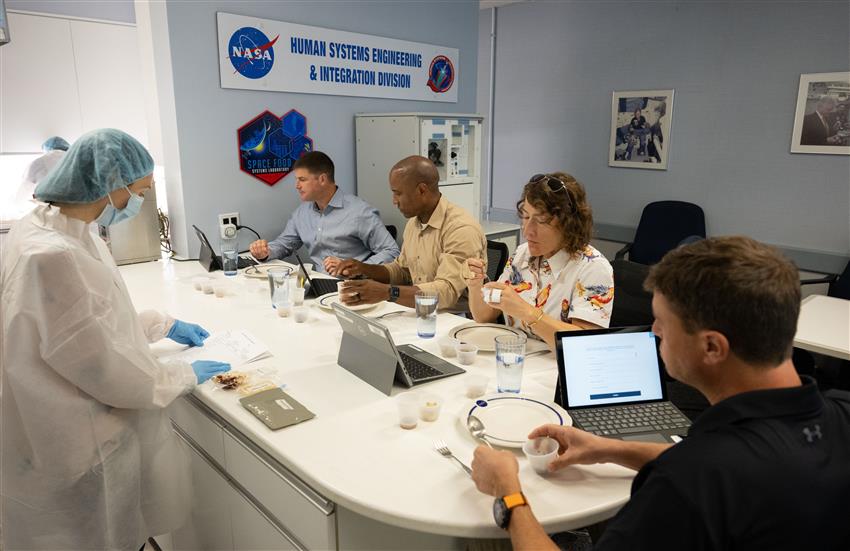
CSA astronaut Jeremy Hansen and his Artemis II crewmates sampled and rated space food for their upcoming Moon mission menu planning. (Credit: NASA/James Blair)
| Orion | ISS | |
|---|---|---|
| Menu | 11-day menu | Eight-day menu (three meals and a snack per day) |
| Water dispenser | Ambient water dispenser only | Ambient and hot water dispenser |
| Food warmer | Food warmer with limited capacity (i.e. power) | Food warmer |
| Canned food | No cans | Canned food allowed |
| Utensils | 1 spoon, 1 pair of scissors per astronaut |
2 forks, 2 spoons, 1 pair of scissors per astronaut |
| Beverages |
|
Based on astronaut preferences
|
Astronauts on the ISS also receive a few food items from their home country to share with their crewmates in addition to the permanent ISS menu. When you're far away from home for several months, it's always a treat to enjoy these. Aboard Orion, Jeremy had access to a few Canadian treats, from maple products to salmon bites and curry.
Staying fit and strong
Inside the Orion spacecraft, astronauts made sure they stayed fit by doing a 30-minute workout nearly every day. This routine helped prevent their muscles and bones from getting weak because of the microgravity environment they lived in.
The flywheel, a clever small piece of equipment, was essential for these workouts. It is placed under the door of the spaceship and acts as a step for the crew to get in and out. This flywheel works kind of like a yo-yo that can be adjusted to make exercises harder or easier. It can be used for activities like rowing and strength training like squats and deadlifts by generating up to 180 kg of resistance.
CSA astronaut Jeremy Hansen explains the use of a flywheel exercise device in microgravity to maintain muscle and bone mass during space missions. (Credits: CSA, NASA, Fulwell 73 UK Limited)
Transcript of the video entitled Vlog 20: Eating in space during the Artemis II lunar mission
Orion's exercise gear is super lightweight, only 14 kilograms, and it's smaller than a regular carry-on suitcase. In comparison, the equipment on the ISS weighs over 1800 kilograms and takes up a lot of space, nearly 80 square metres. This is a great example of exercise technology innovation!
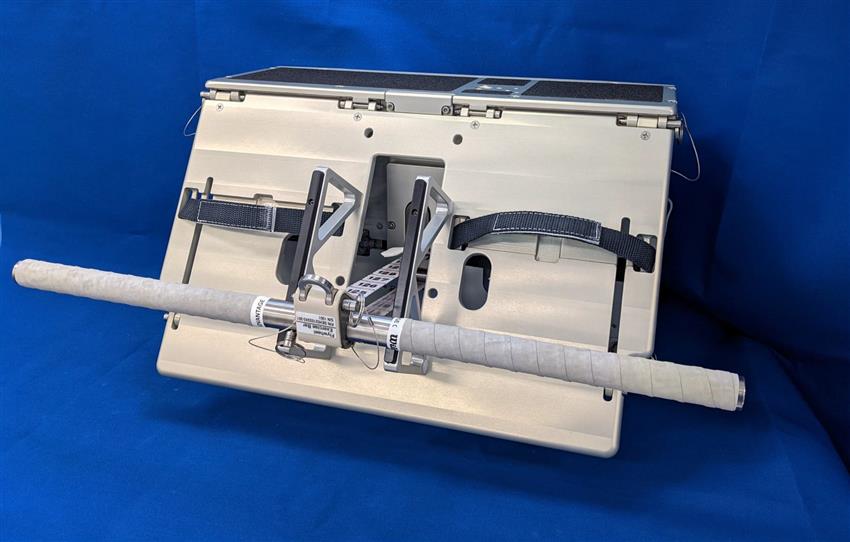
The Artemis II crew exercised on Orion using a flywheel, a simple cable-based device for aerobic exercises like rowing and resistance workouts like squats and deadlifts. It works like a yo-yo, giving astronauts as much load as they put into it, maxing out at 180 kilograms (400 pounds). (Credit: NASA)
Keeping clean
As you can imagine, maintaining good hygiene in the tight quarters of Orion is essential. In space, it is not possible to take a shower – or do laundry! Astronauts must use products such as baby wipes, liquid soap with a bit of water on a washcloth, and no-rinse shampoo to stay clean. Their personal kits also include a toothbrush, toothpaste and shaving accessories.
Their basic hygiene routine was very similar to that of astronauts aboard the ISS. But since their mission was much shorter, the Artemis II crew didn't have to trim their nails or cut their hair in space, which can be tricky!
How do astronauts stay clean aboard Orion? (Credits: CSA, NASA, Fulwell 73 UK Limited)
Transcript of the video entitled Vlog 19: How astronauts stay clean during their mission to the Moon
How do Artemis crew manage stowage and waste aboard Orion? It's important when four people are living in a capsule the size of a camper van – for several days! (Credits: CSA, NASA, Fulwell 73 UK Limited)
Transcript of the video entitled Vlog 24: Stowage and trash – a space struggle
The space loo
On Orion, the crew used the Universal Waste Management System. That's the fancy NASA name for the space toilet. It has a door for additional privacy. This system uses a vacuum system and separates urine and feces. While the first one is vented out into space, the latter is stored for disposal. When there was a problem with the system during the mission, foldable urinals were used to collect and dispose of urine in space, but the regular toilet was still used for feces.
CSA astronaut Jeremy Hansen explains how Orion astronaut go to the bathroom in space. (Credits: CSA, NASA, Fulwell 73 UK Limited)
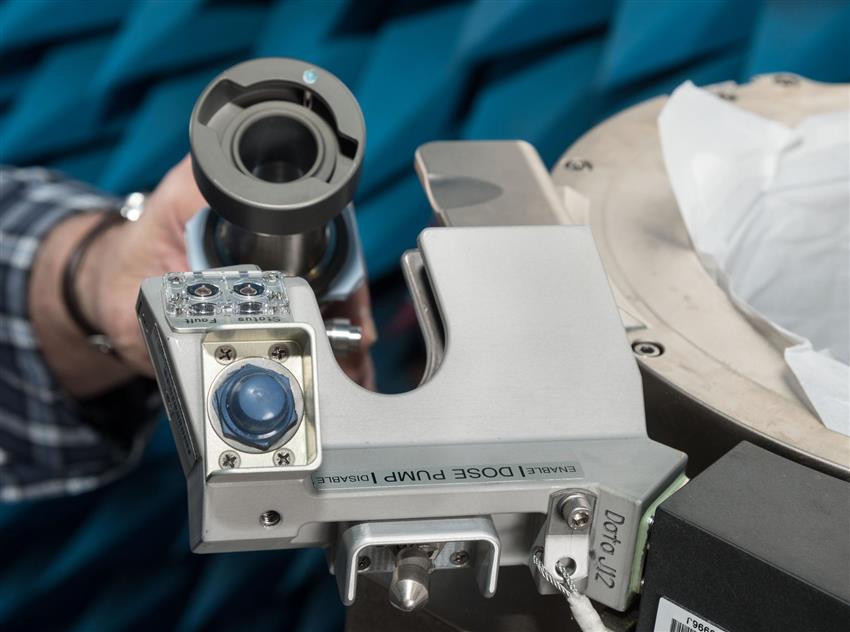
The urine hose of the Universal Waste Management System, aka the toilet, that crewmembers used. A funnel (not shown) is attached to the open end of this hose and can then be easily replaced or removed for disinfection. (Credit: NASA)
Staying connected with Earth
Yes, there was wifi in Orion, but only to connect systems internally. (Unsurprisingly, that's a question we get asked a lot by teenagers!) During the Artemis II mission, astronauts were able to stay connected with Earth most of the time. Using communications satellites and the Deep Space Network, not only were they in nearly constant communication with NASA's Mission Control Center, but they also participated in events with the public and had conversations with their families.
Each crew member also had regular private medical conferences with flight surgeons (aka space doctors) to discuss their health and well-being. There was a medical kit on board Orion that included everything from basic first aid items to diagnostic tools, such as a stethoscope and an electrocardiogram. The crew received medical training before the mission and could use these tools to provide data to physicians on the ground if a minor emergency had occurred.
CSA astronaut Jeremy Hansen explains how radio communication helps the crew stay connected with Mission Control, their families and the public. (Credits: CSA, NASA, Fulwell 73 UK Limited)
Catching some z's
The Artemis II mission's crew had to be prepared for any eventuality. To guarantee the crew's rest, eight hours of sleep were scheduled into their timetable except for the first day, where their sleep schedule was chopped up. The four crewmembers slept at the same time in sleeping bags attached to the walls of the spacecraft.
In this pre-mission vlog, CSA astronaut Jeremy Hansen explained how the Artemis II crew would sleep aboard Orion. (Credits: CSA, NASA, Fulwell 73 UK Limited)
Transcript of the video Vlog 22 - Sleeping aboard Orion: A cozy night in microgravity
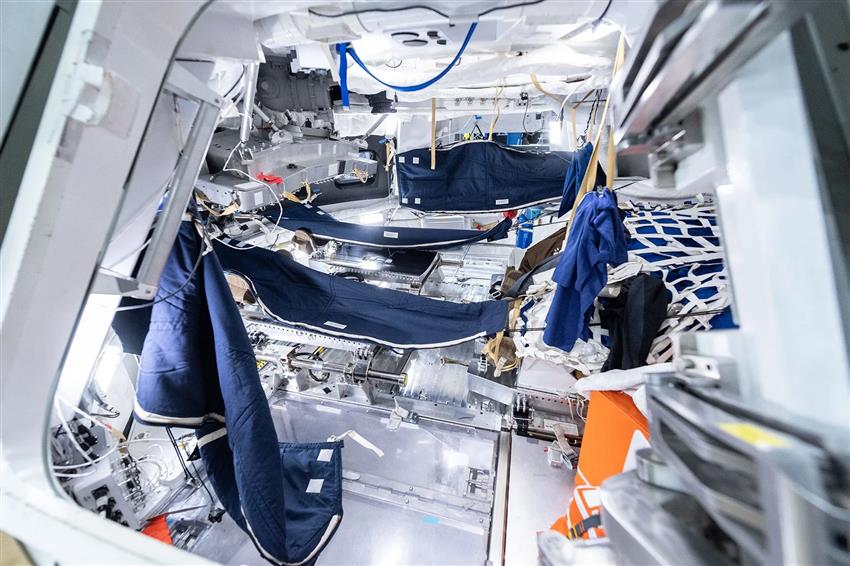
Artemis II crew sleeping bag configurations were tested in the Orion spacecraft medium-fidelity mockup at NASA's Johnson Space Center in Houston, used for astronaut training and systems familiarization. (Credit: NASA)
Any time for fun?
The Artemis II schedule is jampacked, but the crew still had some time to relax, which was important to keep them healthy and focused. They may not have had access to music instruments and games like on the ISS, but they had tablets and laptops to do some journaling and enjoy pre-loaded music. Looking out the window also provided an out of this world view! It's a view that only 24 humans had the privilege of seeing firsthand before them, during the Apollo era.
Before the Artemis II launch, CSA astronaut Jeremy Hansen explainend what he expected doing during his rare time off on his nearly 10 days in space. (Credits: CSA, NASA, Fulwell 73 UK Limited)