
Canadian Space Agency's – Departmental Plan
On this page
Copyright information
© His Majesty the King in Right of Canada, represented by the Minister of Industry and Minister responsible for Canada Economic Development for Quebec Regions,
Catalogue Number: ST96-10E-PDF
ISSN: 2371-7777
At a glance
This departmental plan details the Canadian Space Agency (CSA)'s priorities, plans, and associated costs for the upcoming three fiscal years.
These plans align with the priorities outlined in the Mandate Letter as well as the CSA's Mission, raison d'être, mandate and role, and operating context.
Key priorities
The CSA identified the following key priorities for –:
- Propelling space exploration through the Lunar Program and human spaceflight activities;
- Leveraging space in the delivery of critical services to Canadians; and
- Positioning the Canadian space ecosystem for prosperity.
Comprehensive Expenditure Review
The government is committed to restraining the growth of day-to-day operational spending to make investments that will grow the economy and benefit Canadians.
As part of meeting this commitment, the CSA is planning the following spending reductions (in millions of dollars):
- -: $6,667,218
- -: $11,943,638
- -: $14,366,416
It is anticipated that these spending reductions will involve a decrease of approximately 45 full-time equivalents (FTE) by -. Most FTE reductions will be achieved through natural attrition and revised staffing plans.
The CSA will achieve these reductions by doing the following:
- Streamline and modernize internal services and overall operations
- Terminate work on the LEAP Lunar Rover Mission (LRM)
The figures in this departmental plan reflect these reductions.
Highlights for the Canadian Space Agency in –
The CSA is working with international partners to get back to the Moon and eventually establish a permanent presence there. This is not just about space—it is about creating jobs, boosting the economy, sparking innovation, and advancing science to improve the lives of Canadians.
The CSA is also tackling big challenges here on Earth by building and operating satellites that monitor our planet and its biodiversity, fight climate change, and respond to emergencies like floods. These satellites provide data that supports new and existing applications and services that Canadians rely on every day.
The CSA is investing in Canada's space industry and supporting businesses with fresh ideas. By funding innovative small and medium enterprises (SMEs), the Agency is making sure Canada stays competitive in the fast-growing global space economy and helping to launch the next generation of space entrepreneurs, while also developing Canadian-made space technologies for both civilian and defence purposes.
In –, total planned spending (including internal services) for the CSA is $913,938,318 and total planned full-time equivalent staff (including internal services) is 1,032.5.
Summary of planned results
The following provides a summary of the results the department plans to achieve in – under its main areas of activity, called "core responsibility".
Core responsibility: Canada in Space
The CSA plans to continue to demonstrate global leadership in human spaceflight and innovation, with Canadian astronaut Jeremy Hansen taking part in the historic Artemis II, the first crewed mission to the Moon since . This event will mark the first time a Canadian flies to the Moon. The Artemis II mission is scheduled to take place in depending on launch window opportunities and other factors. A second Canadian astronaut will also participate in a space mission—Joshua Kutryk is set to embark on a long-duration mission to the International Space Station (ISS), marking a significant milestone in Canada's human spaceflight program. This will be the first mission by a CSA astronaut under NASA's Commercial Crew Program.
Several strategic Earth observation (EO) missions and initiatives will support national priorities and strengthen Canada's space sector. The CSA will continue work on adding an additional satellite to the RADARSAT Constellation Mission (RCM) to ensure continuity of essential services to Canadians. The CSA will also continue the development of WildFireSat, the first government-owned satellite constellation dedicated to daily wildfire monitoring across Canada and around the world. This mission is projected to save the Canadian economy between $1 billion and $5 billion over its first five years of operations. In addition, the CSA will continue developing the High-altitude Aerosols, Water vapour and Clouds (HAWC) mission, a Canadian initiative that will provide critical data to support severe and extreme weather prediction, climate modelling, air quality forecasting, and monitoring of disasters, such as volcanic eruptions, wildfires and extreme precipitations with a focus on the Arctic. HAWC will advance atmospheric science and satellite technology and strengthen the space sector. In parallel, the CSA will advance early development of the Arctic Observation Mission (AOM) concept, a dual-satellite system in Highly-Elliptical Orbit (HEO) designed to deliver persistent coverage of the Arctic. AOM would also provide reliable regional-level weather forecasts and alerts, as well as important information on greenhouse gases and air quality in the Arctic.
The CSA will advance the research and development of space technologies that directly support Canada's commercial, defence, and security needs while also aiming to increase exports, diversify partnerships, and promote Canada's cutting-edge expertise in space technology on the world stage. In –, Canadian organizations will continue to participate in European Space Agency (ESA) missions across multiple domains under the current Canada–ESA Cooperation Agreement—benefitting from an additional €407.71 million (representing approximately $664.6 million) of new funding, as announced at ESA's Ministerial Council in . These investments will be part of a forthcoming Canadian Defence Industrial Strategy. Through the Space Technology Development Program (STDP), the CSA will also continue to fund industry-led projects to boost commercialization and global competitiveness. Youth engagement remains a priority, with thousands of students expected to participate in conferences, training, and equity-focused activities. The CSA will also support the NASA International Space Apps Challenge, providing Canadian data, training resources, and expert mentorship to participants nationwide.
Planned spending: $857,063,421
Planned human resources: 666.2
More information about Canada in space can be found in the full plan.
For complete information on the CSA's total planned spending and human resources, read the Planned spending and human resources section of the full plan.
From the Minister
It is my pleasure to present the – Departmental Plan for the Canadian Space Agency (CSA), which outlines the key priorities the Agency is working to advance for the benefit of all Canadians.
As Canada is about to enter a new era in exploration and innovation, space emerges as a critical asset for the nation's sovereignty, defence, and economic development. In an increasingly interconnected world, Canada's ability to monitor and protect its vast territories—from the Arctic to coastal waters—relies on advanced satellite technologies and space-based systems. These capabilities support essential services Canadians rely on, from responding to natural disasters to tracking sea ice and ensuring the safe delivery of supplies to northern communities. Space also fosters resilience in the face of climate challenges. By harnessing space-based tools to monitor environmental changes, track wildfires, and respond to natural disasters, the CSA enhances Canada's ability to build resilient communities from coast to coast.
Moreover, space serves as a beacon for scientific leadership and a magnet for talent, drawing the brightest minds to Canada's shores. The CSA's contributions to international missions, such as the Artemis II mission, are a reflection of Canada's expertise in robotics, AI, satellite communication, and remote sensing. These endeavours not only advance human knowledge, but also inspire youth to reach for the stars. By nurturing partnerships with universities and research institutions, the CSA cultivates a vibrant ecosystem that retains top talent and attracts global experts.
Space is a powerful driver of economic growth, creating opportunities that extend across industries and regions. Through strategic international collaborations, including an expanded investment with the European Space Agency, the CSA leverages shared resources and expertise. These collaborations strengthen Canada's impact and ensure long-term benefits from a rapidly growing space economy, fostering prosperity for generations to come.
In embracing space as a cornerstone of the future, Canada is not only securing its place among the stars, but also fortifying the foundations of a stronger, more innovative nation. The CSA will continue to reach higher, guided by Canada's vision for space and the determination of Canadians.
I invite you to read this report to learn more about how the CSA is supporting all Canadians in participating in, and benefitting from, a competitive and growing economy.

The Honourable Mélanie Joly, P.C., M.P.
Minister of Industry and Minister responsible for Canada Economic Development for Quebec Regions
Plans to deliver on core responsibilities and internal services
Core responsibilities and internal services
Core responsibility: Canada in Space
In this section
- Description for Core responsibility: Canada in Space
- Quality of Life impacts
- Indicators, results and targets for Core responsibility: Canada in Space
- Plans to achieve results for Core responsibility: Canada in Space
- Gender-based Analysis Plus for Core responsibility: Canada in Space
- Planned resources to achieve results for Core responsibility: Canada in Space
- Program inventory for Core responsibility: Canada in Space
- Summary of changes to reporting framework since last year for Core responsibility: Canada in Space
Description
The CSA coordinates the space policies and programs of the government of Canada; ensures that other government departments and agencies have access to space data, information, and services to deliver on their mandate; plans, directs and manages projects relating to scientific or industrial space research and the development of space science and technology; promotes the transfer and diffusion of space technology to and throughout the Canadian industry; and encourages the commercial exploitation of space capabilities, technology, facilities and systems. The CSA also aims to build Canada's capacity and engage the next generation of space scientists and engineers, and provide opportunities to inspire young people to develop the required skills and to pursue studies and careers in science, technology, engineering and math.
Quality of Life impacts
The CSA's core responsibility involves supporting the Canadian space sector and creating capacity through research and development, skill building, and via supporting youth participation in STEM programming.
The activities under this core responsibility contribute directly to the "Prosperity" domain of the Quality of Life Framework for Canada, and, more specifically, "Firm dynamism", "Employment", and "Child skills, Adolescent skills and Adult skills" indicators. The CSA's coordination of space programs and missions also contributes to the "Society" domain and "Sense of pride in Canada" indicator.
The CSA contributes to the "Environment" domain by ensuring access to space data and information, which enable other government departments and agencies to deliver services that address the environment (predominantly the "Natural disasters and emergencies" and "Climate change adaptation" indicators).
Indicators, results and targets
This section presents details on the department's indicators, the actual results from the three most recently reported fiscal years, the targets and target dates for Canada in Space. Details are presented by departmental result.
Table 1: Canada remains a leading space-faring nation
| Departmental Result Indicators | Actual Results | – Target | Date to achieve target |
|---|---|---|---|
| Number of space missions with Canadian content or Canadian astronauts enabled by CSA. |
|
24 | |
| Number of scientific peer-reviewed publications enabled by CSA funding |
|
138 |
Table 2: Space information and technologies improve the quality of life of Canadians
| Departmental Result Indicators | Actual Results | – Target | Date to achieve target |
|---|---|---|---|
| Number of services offered to Canadians dependent on space data |
|
37 | |
| Number of Canadian space technologies adapted for use on Earth or re-use in space |
|
115 |
Table 3: Canada's investments in space benefit the Canadian economy
| Departmental Result Indicators | Actual Results | – Target | Date to achieve target |
|---|---|---|---|
| Number of employees in the Canadian space sector |
|
14,000 | |
| Number of Canadian organizations involved in projects funded by CSA |
|
350 |
Additional information on the detailed results and performance information for the CSA's program inventory is available on GC InfoBase.
Plans to achieve results
The following section describes the planned results for Canada in Space in –.
-
Result 1 - Canada remains a leading space-faring nation
Results we plan to achieve
- From the International Space Station…
-
In –, CSA astronaut Joshua Kutryk is set to fly to the International Space Station (ISS) for a long-duration mission. This will mark Canada's fourth long duration mission (CAN4) to the ISS, during which astronaut Kutryk will spend several months in space conducting Canadian and international science experiments, among other tasks. He is fully trained to perform spacewalks and robotics operations using Canadarm2 if needed while he is onboard. The science activities undertaken during the CAN4 mission will lead to increased knowledge about humans' capacity to live in space.
In –, the Canadian robotic arm Canadarm2 will continue providing essential support around the ISS, grappling and berthing visiting vehicles, supporting astronauts on spacewalks, and maintaining the station. Canadarm2 engineering and operations activities support approximately 140 highly skilled jobs in Canada every year.
In return for Canada's robotic contribution to the ISS, Canadian scientists and industry will continue to have access to the ISS orbital laboratory to conduct innovative experiments and technology development. In –, the CSA will support four new ISS human health research projects and one protocol that will begin their on-orbit data collection and activities, as well as up to 16 ground studies. These studies will help us understand how to mitigate the risks of spaceflight on human health and contribute to keeping astronauts healthy when they travel to the Moon and beyond. They will also enable the development of new approaches in health care that can be applied on Earth in the context of inactivity, vision issues, anemia, stress management, dizziness and neurological diseases. The CSA is also planning to launch the MicroPREP instrument to the ISS. This technology will help with the preparation and purification of research samples collected on the space station, facilitate their analysis, accelerate science results, and reduce the need for samples to be returned to Earth.
After more than 25 years of operation, the ISS is set to be retired in . Successor space stations are emerging under NASA's Commercial Low Earth Orbit (LEO) Destinations program and other international partners' plans for LEO, paving the way to a dynamic new chapter in human spaceflight. In –, the CSA will study options to ensure the continuity of Canada's astronaut, research, and technology activities in low Earth orbit after the ISS is decommissioned.
- …in Earth's orbit…
-
In –, the CSA will launch QEYSSat, a mission aimed at demonstrating quantum key distribution (QKD) in space, a new technique that ensures the confidentiality of information exchanged between two parties in a future quantum computing enabled world where traditional encryption technologies are no longer secure. This partnership with academia and industry will allow Canadian scientists and researchers to demonstrate and study how QKD behaves in space, and lay the groundwork for a global network supporting the exchange of encryption keys over long distances.
- …to the Moon…
-
CSA astronaut Jeremy Hansen will become the first Canadian—and first non-American—to ever participate in a lunar mission as part of Artemis II, the first crewed mission to the Moon since the Apollo missions over 50 years ago. This mission is destined to chart the course for a durable lunar presence and pave the way for human exploration of Mars.
Building on a legacy of leadership in space robotics, the CSA will continue to develop Canadarm3, Canada's contribution to the lunar science laboratory Gateway. A critical design milestone is planned to be achieved in early . Additionally, the Gateway External Robotic Interface (GERI), designed to provide robotic interfaces for Canadarm3 to attach and move around the Gateway station, is expected to deliver flight hardware for integration on Gateway modules in .
The CSA will continue to explore potential science and technology payloads for deployment to Gateway, with the goal of advancing science in the unique environment of the lunar orbit. The CSA will prioritize activities that are best suited for implementation in the lunar environment, keep astronauts healthy, prepare human space exploration, and have a high potential for benefits here on Earth.
In –, the CSA will continue the development of a CubeSat mission to study the lunar surface under the Lunar Exploration Accelerator Program (LEAP). This mission aims to advance our understanding of the geology and resource potential of the lunar surface.
The CSA will continue preparatory activities to develop a lunar utility rover, designed to support operations on the Moon such as, but not limited to, surveying, cargo transport, support to astronaut activities and lunar science. In –, the CSA will continue to support studies to assess different options for the rover, including potential capacities depending on different sizes and scope. The CSA will also work with Canadian organizations to develop mission concepts and requirements for lunar science instruments.
The CSA continues to investigate potential future Canadian contributions for the Moon's surface infrastructure as part of humanity's move toward a sustainable human presence. The CSA will prioritize various capability areas, with a particular focus on key technologies to enable lunar and deep space exploration, including power systems and space resource utilization. These efforts aim to position Canada's industry and research community as competitive and valued partners in the growing global lunar economy.
- …and beyond, in the solar system
-
The CSA is leading the Health Beyond and Food Production initiatives as part of its effort to position Canada as a partner of choice for upcoming deep space missions. In –, the CSA will support the development of payloads that will be demonstrated on the ISS to promote astronaut health and support plant growth experiments. Health Beyond's payloads will consist of a portable testing device to assess blood clot risks during missions, and an AI-enabled medical system with interconnected devices to support health care delivery to astronauts. A prototype for the Food Production payload will enhance the functionality of existing ISS plant growth hardware while reducing the time burden on the crew. Technologies stemming from these initiatives will have the potential to be reused here on Earth in remote communities, where harsh and isolated environments limit the ability to grow nutritious food and to provide accessible health care.
Activities will continue on Mars with NASA's Curiosity rover, which has been exploring the surface of the planet since . In that time, the rover has travelled 36 kilometres on the Martian surface, and the Canadian provided Alpha-Particle X-ray Spectrometer (APXS) has analyzed 1,732 samples and sent back 3,858 results to Earth. This includes a discovery in of pure sulfur crystals, which had never before been observed on Mars. The Curiosity rover and APXS instrument continue to advance our understanding of past conditions on Mars that could once have supported life on that planet. As the Curiosity rover embarks on its fifth extended mission, the CSA is considering an extension of its APXS instrument support over the next three years.
In –, the CSA will conclude the construction of the OSIRIS-REx sample curation facility at the Agency's headquarters in anticipation of receiving Canada's sample of the Bennu asteroid. NASA will transfer the sample to the CSA once the facility is ready. The CSA will continue to monitor the health of the OSIRIS-REx Laser Altimeter (OLA) instrument aboard the OSIRIS-APEX spacecraft as it journeys toward asteroid Apophis, targeting arrival in .
In collaboration with the National Research Council and the Space Telescope Science Institute, the CSA will continue providing ongoing engineering support to the James Webb Space Telescope (JWST) as it completes its fourth year of operations. The CSA contributed two Canadian-built instruments to support the JWST mission—the Fine Guidance Sensor (FGS) and the Near-Infrared Imager and Slitless Spectrograph (NIRISS). In return for this contribution, Canadian researchers and astronomers have access to the telescope to observe the universe and advance space science. In –, the CSA will support up to 38 Canadian research projects using the JWST and is preparing to issue its fifth Announcement of Opportunity to support Canadian astronomers.
In –, as part of Canada's participation in the ESA-led Ariel space telescope project, the CSA will deliver engineering qualification models of a cryoharness to the Ariel Mission Consortium (AMC). The sensors making up the payloads on the telescope are heat sensitive—the Canadian cryoharnesses are cables that are specially designed to address heat sensitivity and will connect the main body of the satellite to the payloads and enable the telescope's sensors to operate within their optimal thermal operating conditions.
-
Result 2 - Space information and technologies improve the quality of life of Canadians
Results we plan to achieve
- Earth observation – Operational missions for service to Canadians
-
In alignment with the objective of protecting Canadian sovereignty and keeping Canadians safe, the CSA will work on adding an additional satellite to the RADARSAT Constellation Mission (RCM) to ensure continuity of services that rely on RCM's Synthetic Aperture Radar (SAR) imagery data. The CSA will also continue work on the RADARSAT+ initiative, designing a next-generation Earth observation satellite system.
SAR data is vital to preserving our territorial integrity and sovereignty, enabling informed decision-making in natural resource management, environmental protection, maritime safety, surveillance of the Arctic, and national security, among others. SAR imagery data from RCM is also an important component of the Canadian Armed Forces' current EO capability and is integral to their ability to monitor and secure Canada's maritime regions. It is estimated that approximately 300,000 Government of Canada (GC) SAR data imagery requests will be processed in –.
In –, the CSA will advance the development of the first government-owned wildfire monitoring satellite constellation, WildFireSat. The WildFireSat mission is planned to launch in and aims to monitor all active wildfires in Canada and across the globe from space on a daily basis. The mission will support wildland fire management and research and improve Canada's ability to protect our communities, resources, infrastructure, and environment against wildland fire disasters. This mission is expected to save the Canadian economy between $1 billion and $5 billion over its first five years of operation.
The CSA, working with other partners across government, will also advance development and planning for the Arctic Observing Mission (AOM) to help improve functional operations across the Arctic territory. This mission concept, if approved and funded, will consist of two satellites in a Highly Elliptical Orbit (HEO) allowing persistent coverage of the Arctic, providing Canadians living in northern regions with reliable regional-level weather forecasts and alerts. AOM would also provide important information on greenhouse gases and air quality in the Arctic.
- Earth observation – Scientific missions for monitoring extreme weather events from space
-
Development of the High-altitude Aerosols, Water vapour and Clouds (HAWC) mission will continue in –. This EO mission will advance atmospheric science and satellite technology and strengthen the space sector. The data gathered by HAWC will allow Canadians to better anticipate and prepare for extreme weather events including storms, floods, droughts, and poor air quality conditions.
SCISAT is entering its 22nd year in orbit and continues to deliver far beyond its original mission goals. Data obtained through SCISAT will continue to support over 65 research institutions conducting studies on atmospheric composition.
After 25 years of loyal service collecting data, MOPITT was decommissioned in April 2025 due to a lack of power onboard the hosting TERRA satellite. Canada's MOPITT instrument on NASA's TERRA satellite performed over 2.2 billion atmospheric scans and enabled 50 scientific discoveries. Its data record remains fundamental to studies of environmental pollution, climate modelling, and policy-making worldwide. In –, the CSA will focus on archiving valuable historic data from MOPITT, ensuring data disposition, distribution, and archiving consistent with Canadian data sovereignty. Additionally, data validation activities will be carried out in order to maintain the MOPITT carbon monoxide (CO) dataset as the CO space-based global reference to produce air quality forecasting products over the next approximately five years.
-
Result 3 - Canada's investments in space benefit the Canadian economy
Results we plan to achieve
- Canada and the European Space Agency
-
The CSA will strengthen Canada's access to the European space market by maximizing the value to Canadian industry that can be realized through the – Canada European Space Agency Cooperation Agreement. As announced in , the Government of Canada is investing a total of €407.71 million (representing approximately $664.6 million) of new funding, meaning that Canadian companies will receive contracts from ESA in proportion to Canada's investment, helping them to advance their state-of-the-art made-in-Canada space technologies as part of a forthcoming Canadian Defence Industrial Strategy. This funding will also help to advance retain and grow a space industrial base capable of contributing to Canada's defence and security needs. In –, at least 45 Canadian organizations will participate in ESA missions and activities in Earth observation, satellite communications, space exploration, navigation, space safety, and technology development.
- Supporting small and medium enterprises (SMEs) and the prosperity and growth of Canadian space industry
-
In –, through the Space Technology Development Program (STDP), the CSA will continue to fuel growth and innovation in Canada's space industry and address aspects of technology that are not yet fully understood or predictable. Addressing technological unknowns, and therefore reducing the risks, is a prerequisite for making space technology more reliable and marketable. The STDP will provide up to 25 funding opportunities for Canadian organizations to develop technologies to support future technological needs of the Canadian Space Program or that have strong potential for commercialization.
The CSA plans to invest $2.65 million through its smartEarth initiative aimed at providing capacity development opportunities to Canadian industry, for-profit organizations and not-for-profit organizations. The Satellite Mobilization for Biodiversity Action (SaMBA) initiative will help address the Nature Strategy (Halting and Reversing Biodiversity Loss in Canada) as part of Canada's Kunming-Montreal Global Biodiversity Framework (GBF) commitment.
The CSA will also support the development of an open-source Earth observation data platform prototype, Digital Earth Canada (DEC), a powerful networked system serving as a common access point for Canadian and foreign sources of open and free geospatial data. DEC aims to deliver interoperable and analysis-ready data to increase workflow effectiveness, ease of use, and efficient extraction of results, enabling new users of EO data.
In –, the CSA issued a public Request for Information to evaluate the ability of the commercial EO industry to meet some of the Government of Canada's current and future satellite imagery needs. In early –, an options analysis will be completed with the intent to support evidence-based decision-making for refining commercial data requirements, identifying viable commercial solutions, and guiding future procurement strategies.
In –, the CSA will host the National Forum on Earth Observation. This event will bring together Canadian stakeholders from industry, academia, Indigenous communities, and the public sector to assess current EO undertakings and discuss the next steps to ensure the ongoing enhancement of Canadian EO capabilities and cooperation.
- Empowering youth
-
The CSA will facilitate the participation of an estimated 60 Canadian students to attend national and international conferences and training events throughout –. These opportunities will not only help students expand their professional networks and engage directly with the latest advancements in space science and technology, but also contribute to shaping the highly qualified personnel of tomorrow.
An estimated 170 Canadian students will participate in activities aimed at increasing equity, diversity and inclusion in the space sector.
The CSA will also contribute to the NASA International Space Apps Challenge by offering training materials and the expertise of CSA professionals serving as mentors and judges. This initiative is expected to engage approximately 2,000 individuals from across Canada, including a significant number of youth, fostering innovation and interest in space science and technology.
The CSA, in collaboration with the Bibliothèque et Archives nationales du Québec (BAnQ) and École en réseau, will deliver a virtual workshop on lunar geology and rover exploration for elementary students. Complemented by follow-up materials, digital resources, and a curated book list, this initiative is expected to engage approximately 150 classes from across Canada, inspiring curiosity and interest in space science, robotics, and technology.
- Supporting academic scientific research
-
The CSA is planning to launch several Stratospheric Expandable Balloon flights in the summer of from Timmins, Ontario. This will give approximately 50 students the opportunity to design payloads and test them in a near-space environment, as well as inspire and train the next generation of experts.
The CubeSats Initiative in Canada for STEM (CUBICS) provides training for hundreds of Canadian post-secondary students in the development of scientific CubeSat missions. Of the missions engaging the nine teams supported by the CSA, at least one will be launched in .
In –, the Flights and Fieldwork for the Advancement of Science and Technology (FAST) program will continue to support cutting-edge scientific and technological research in academia by carrying out field experiments in space-like environments with stratospheric balloons or in a simulated reduced-gravity environment using the National Research Council's Falcon 20 aircraft. In –, at least 40 FAST-funded projects will be active, led by professors from over 20 universities and colleges across Canada and involving more than 450 students and highly qualified personnel.
Gender-based Analysis Plus
Gender-based Analysis Plus (GBA Plus) will continue to inform and shape decisions and internal processes in –, including by applying a GBA Plus lens to all programs, policies, and initiatives. This is a government-wide priority, and the CSA is committed to improving equity in the space sector by addressing barriers to participation for equity-deserving groups. Increasing equity, diversity, and inclusion in the space sector is key to achieving our mandate, which is to ensure that space science and technology provide social and economic benefits for Canadians.
After renewing its GBA Plus Policy and implementation tools in –, the CSA continues to work on its GBA Plus Action Plan to implement the Policy. The Action Plan includes three pillars:
- Increase accountability and shared responsibility to implement GBA Plus in all CSA activities;
- Promote and strengthen GBA Plus as a competency through enhanced learning opportunities, resources, and tools that are made available to all CSA employees;
- Enhance the approach for communicating how the CSA's activities impact diverse groups of people in Canada through GBA Plus.
Internationally, the CSA continues to support the Space4Women program led by the United Nations Office of Outer Space Affairs (UNOOSA). The CSA collaborated with UNOOSA in the creation of the first Gender Mainstreaming Toolkit for space and will continue to support its implementation.
Planned resources to achieve results
Table 4: Planned resources to achieve results for Canada in Space
| Resource | Planned |
|---|---|
| Spending | $857,063,421 |
| Full-time equivalents | 666.2 |
Complete financial and human resources information for the CSA's program inventory is available on GC InfoBase.
Program inventory
Canada in Space is supported by the following programs:
- Space Exploration
- Space Utilization
- Space Capacity Development
Additional information related to the program inventory for Canada in Space is available on the Results page on GC InfoBase.
Summary of changes to reporting framework since last year
The CSA's Departmental Results Framework underwent the following notable changes for –:
- Result 1: the two existing indicators were replaced by two new indicators:
- Number of scientific peer-reviewed publications enabled by CSA funding.
- Number of space missions with Canadian content or Canadian astronauts enabled by CSA.
- Result 3: one of the existing indicators was replaced by a new indicator:
- Number of Canadian organizations involved in projects funded by CSA.
Internal services
In this section
Description
Internal services are the services that are provided within a department so that it can meet its corporate obligations and deliver its programs. There are 10 categories of internal services:
- acquisition management services
- communications services
- financial management services
- human resources management services
- information management services
- information technology services
- legal services
- material management services
- management and oversight services
- real property management services
Plans to achieve results
This section presents details the department's plans to achieve results and meet targets for internal services. In – the CSA is continuing the transformation of its internal services to deliver agile, integrated, and client-focused solutions that strengthen organizational performance and adaptability. This includes:
Optimizing the workplace and procurement
As part of the CSA's effective stewardship of real property, it will continue to promote efficient and sustainable use of its real property holdings, all the while maintaining and enhancing core requirements of federal custodians, such as universal accessibility, alignment with the department's sustainable development strategy and a robust long-term portfolio strategy geared to program needs. To support these goals, the CSA will enhance governance, leverage digital tools, and reinforce evidence-based decision-making to improve environmental and financial performance, safeguard occupant health and safety, and maximize the overall value and effectiveness of its assets.
In –, the CSA will complete the implementation of its Procurement Management Framework, improving governance and oversight of procurement activities. The Agency will also finalize its organizational design and capacity-building strategy for the procurement function to enable a more strategic and effective procurement process.
Providing modern tools and a secure digital environment
The CSA will continue to advance its Digital Transformation with continuing efforts in the integration of artificial intelligence and process automation, creating efficiencies in the way the Agency operates. In –, the CSA will finalize its transition to new telecommunication methods, supporting the government's plan to reduce recurring expenses in this area. Continuing to implement the CSA's – Data Strategy will simplify access to data and enhance decision-making across the organization. By offering modern tools, the CSA will empower its employees and streamline and enhance its operations in a rapidly evolving digital landscape. For example, the deployment of an internal data catalogue will help make the Agency's data assets easier to find and access. And with its enhanced business intelligence infrastructure, the CSA will be better equipped to leverage this data to meet its business needs. Lastly, a strengthened data governance framework, supported by employee awareness initiatives and upskilling opportunities, will empower staff to confidently fulfill their data-related roles and responsibilities.
Cybersecurity remains a national priority and a critical risk for the CSA. For –, key actions will include planning and executing cybersecurity assessments and authorizations for space missions, as well as preparing for the transition to post-quantum cryptography. By integrating advanced sensors and AI capabilities and deepening collaboration with key other government departments (OGD), the CSA will strengthen its alignment with the Government of Canada's Integrated Cybersecurity Strategy and with best practices promoted by international space agencies.
Fostering a diverse and inclusive workforce
The CSA will continue implementing its People Strategy for –, its overarching framework for human resource management. Key priorities include supporting the CSA's mission by fostering strong leadership, enhancing performance and talent management, promoting learning and development, and leveraging HR data for analysis and forecasting. The Strategy also aims to build a healthy, respectful, diverse, and inclusive workplace by strengthening culture and belonging, improving the employee experience and wellness, and advancing diversity and inclusion initiatives. Building on progress from the first Accessibility Plan (–), tabled in , the CSA will publish its second three-year Accessibility Plan for –.
Enhancing information access and utilization
The CSA will continue to strengthen its information and data governance by optimizing end-to-end information lifecycle management to promote information and data as a valuable asset, and ensure improved access, integrity, and reuse. The long-term objective is to establish a fully integrated digital ecosystem—one where information and data flow seamlessly across platforms, become a strategic asset, and are leveraged intelligently and securely, in alignment with the CSA's – Information Management Plan and the – Data Strategy.
To achieve this, AI-driven solutions—such as Project Aviator—will be piloted to automate document security classification and enhance decision-making. Interoperability between record management software will be improved, enabling greater fluidity and collaboration across core systems. Additionally, advanced search tools will be tested to provide faster and more precise access to information, improving efficiency and knowledge sharing across the organization. Open government principles are a central part of the CSA's space missions—these principles ensure greater accessibility and transparency of mission data. The CSA will also implement, refine, and expand processes for developing a comprehensive inventory of internal and external services.
Financial Management
In -, the CSA will continue its multi-year approach for transforming its financial management processes. Its goals are improved forecasting accuracy, faster data-driven decision-making, better alignment with strategic priorities, and adopting a culture of continuous improvement. This will strengthen the CSA's organizational resilience and prepare the Agency for future challenges. Key activities include automating transactional and reporting processes to reduce manual workload and errors, deploying advanced analytical tools to enable real-time insights, and integrating multi-year financial planning frameworks to support proactive resource allocation.
Promoting sustainability through green practices
In support of the Greening Government Strategy and the CSA's – Departmental Sustainable Development Strategy, the Agency will continue integrating sustainable practices into its operations and advancing its efforts to decarbonize its facilities and fleet, improve green procurement, and completing a Life Cycle Assessment (LCA) for a space mission. The purpose of the LCA is to better understand the environmental impacts and carbon reduction opportunities for R&D service contracts and to identify solutions for decarbonizing these contracts. The CSA will continue working with suppliers on responsible consumption and carbon data sharing, while advancing implementation of the Green Procurement Directive and developing standards to formalize compliance and reduce embodied carbon.
Departmental Security Plan renewal
In –, in alignment with the Policy on Government Security, the CSA will launch its – Departmental Security Plan (DSP) to maintain compliance with federal security requirements and strengthen organizational resilience. Building on lessons learned and a comprehensive risk assessment, the plan will address physical, personnel, IT, and emergency security while adapting to evolving threats and the national security landscape. Key priorities include enhancing governance, modernizing security technologies, and fostering a culture of security awareness. Through these efforts, the CSA will safeguard its people, assets, and information, enabling mission success in a secure and adaptive environment.
Planned resources to achieve results
Table 5: Planned resources to achieve results for internal services this year
| Resource | Planned |
|---|---|
| Spending | $56,874,897 |
| Full-time equivalents | 366.3 |
Complete financial and human resources information for the CSA's program inventory is available on GC InfoBase.
Planning for contracts awarded to Indigenous businesses
The CSA is committed to advancing reconciliation efforts and continuing to focus on the creation of economic opportunities for Indigenous peoples. As part of this commitment, the Agency aims to award at least 5% of the value of contracts to businesses owned and led by Indigenous peoples.
To achieve this target, the CSA will continue to implement its Procurement Strategy for Indigenous Businesses which includes the use of conditional or voluntary set-asides to increase contract awards to Indigenous businesses, and Indigenous Participation Plans (IPPs) to grow Indigenous supplier capacity. Specific ongoing actions that will continue to be refined in – include:
- IPPs built into construction contracts and space projects to specify the amount of work that must be provided by indigenous suppliers;
- Contracting with Indigenous businesses who have qualified under Standing Offers and Supply Arrangements; and
- Set-asides when possible.
The CSA will also provide training throughout the year for procurement and project officers, including on identifying Comprehensive Land Claims Areas and using the Indigenous Business Directory to pursue opportunities with Indigenous suppliers. The CSA will also finalize its Procurement Management Framework in accordance with the Directive on the Management of Procurement, which includes considerations for Indigenous procurement.
The CSA continues to recognize challenges in sourcing contracts for research and development and space projects from Indigenous businesses. As a result, exceptions have been granted for these contracts, and they were excluded from the calculation of the 5% target. Depending on Indigenous business capacity, if necessary, these types of contracts may once again need to be excluded from the calculation of the 5% target in –.
Table 6: Percentage of contracts planned and awarded to Indigenous businesses
| 5% Reporting Field | – Actual Result | – Forecasted Result | – Planned Result |
|---|---|---|---|
| Total percentage of contracts with Indigenous businesses | 9.15% | 10% | 10% |
Department-wide considerations
In this section
Related government priorities
United Nations Agenda for Sustainable Development and the UN Sustainable Development Goals
The CSA's – Departmental Sustainable Development Strategy (DSDS) report outlines its contributions to advancing the United Nations' Sustainable Development Goals (SDGs) by leveraging space technologies and expertise to deliver tangible benefits on Earth. For SDG 2 (Zero Hunger), the CSA has advanced a suite of activities to drive the development of advanced food production technologies designed for space missions. These innovations also have the potential to address food security challenges in remote communities, with a target of adapting two such technologies for use on Earth in the agri-food sector by –.
For SDG 3 (Good Health and Well-Being), the CSA continues to advance the Health Beyond initiative, which focuses on cutting-edge medical technologies developed for extreme space environments. These technologies are adaptable to enhance health care delivery in isolated and underserved communities, with a target of three space health technologies adapted for terrestrial use by –. The CSA also supports SDG 4 (Quality Education) by inspiring the next generation of STEM professionals through outreach programs and initiatives, such as CUBICS. By –, these programs aim to engage hundreds of Canadian youth, fostering the skills and knowledge essential for addressing global sustainability challenges.
In support of SDG 13 (Climate Action), the CSA leverages its satellites and partnerships for the production of Earth observation imagery and science data to contribute to emergency management and disaster risk reduction efforts. This includes providing satellite imagery for the International Charter on Space and Major Disasters, with the target of CSA data supporting 80% or more of activations annually. For SDG 17 (Partnerships for the Goals), the CSA emphasizes international collaboration to advance space technologies and sustainability. By –, these partnerships are anticipated to enable 60 services offered by other government departments (OGDs) and the private sector to rely on space-based data. Together, these initiatives reflect the CSA's dedication to aligning its space activities with sustainable development goals, ensuring that space innovations translate into meaningful benefits for Canadians and the global community.
More information on the CSA's contributions to Canada's Federal Implementation Plan on the Agenda and the Federal Sustainable Development Strategy can be found in our – Departmental Sustainable Development Strategy Report.
Artificial Intelligence
The CSA will deploy artificial intelligence (AI) to increase productivity, reduce operating costs, improve service delivery, and advance its departmental mandate in space exploration and utilization, and innovation. In –, the Agency will deploy its AI strategy and AI framework, guiding CSA's AI initiatives in automation and analytics to ensure responsible, ethical, and secure adoption. These initiatives align with the CSA's – Data Strategy and will make information more accessible and actionable.
To prepare the workforce and organization for AI adoption, the CSA will:
- Upskill employees to use AI safely and effectively through targeted training programs;
- Implement change management strategies to support organizational readiness;
- Increase data readiness and strengthen governance practices; and
- Provide access to approved AI tools and resources for developing AI solutions.
Key risks
The CSA is currently updating its Corporate Risk Profile to reassess the key risks that could have an impact on the organization's priorities, performance, and objectives for – and beyond. As part of the previous risk review in –, the CSA identified five corporate risks as priorities: Aging Space-Related Infrastructure, Financial Climate-Related Risks; Resource Management; Talent; and Cybersecurity.
These risks represent areas that could affect the CSA's operations and organizational capabilities. Aging space-related infrastructure poses challenges to operational efficiency, mission success, and relationships with both domestic and international partners. Financial Climate-Related risks have implications on rising costs due to extreme weather events, potential operational disruptions, and long-term pressures on infrastructure. Resource management remains a critical concern, as the CSA must balance strategic alignment and operational efficiency with robust governance and control mechanisms. Lastly, the CSA's information technology infrastructure faces risks from cyber attacks or other deliberate actions that could disrupt services or compromise confidential information.
The CSA continues to actively monitor these risks and implement mitigation strategies to reduce potential impacts. A formal process is in place to review and reassess risks annually to ensure they remain current and effectively managed.
Planned spending and human resources
This section provides an overview of the CSA's planned spending and human resources for the next three fiscal years and compares planned spending for – with actual spending from previous years.
Spending
This section presents an overview of the department's planned expenditures from – to –.
Graph 1 presents the department’s planned spending in – by core responsibility and for internal services.

The graph above indicates that, for –, the CSA plans to allocate $857,063,421 to its core responsibility, “Canada in Space,” and $56,874,897 to internal services. This visual highlights the substantial investment allocated to Canada’s space-related activities compared to internal services.
Text description of Graph 1
| Core responsibilities and internal services | – planned spending |
|---|---|
| Canada in Space | $857,063,421 |
| Internal services | $56,874,897 |
Budgetary performance summary
Table 7: Three-year spending summary for core responsibilities and internal services (dollars)
| Core responsibilities and Internal services | – Actual Expenditures | – Actual Expenditures | – Forecast Spending |
|---|---|---|---|
| Canada in Space | 371,378,033 | 549,195,233 | 1,305,371,191 |
| Internal services | 79,369,177 | 85,531,308 | 56,089,456 |
| Total(s) | 450,747,210 | 634,726,541 | 1,361,460,647 |
Analysis of past three years of spending
The above table highlights the expenditures by the CSA over the past three years to fulfill its core responsibilities and provide internal services. The amounts for the current fiscal year are projected based on spending recorded to date.
The actual spending variances in – and – along with the forecasted expenditures for – presented in Table 7 align with the Agency's flagship investment funding.
- The net increase from – to – is mainly due to factors related to Canadarm3, more specifically to the Definition and Implementation phases.
- From – to –, the net increase is mainly due to Canada's investments to the European Space Agency (ESA) programs by an additional $528.5 million to advance research and development of Canadian-made space technologies for both civilian and defence purposes.
- The net decrease in the Internal Services section is mainly due to the change of the methodology for allocating resources under its core responsibility and internal services. This new methodology (beginning with the – Departmental Plan) better reflects the role that these resources play to support the Agency's core responsibility – Canada in Space.
More financial information from previous years is available on the Finances section of GC Infobase.
Table 8: Planned three-year spending on core responsibilities and internal services (dollars)
| Core responsibilities and Internal services | – Planned Spending | – Planned Spending | – Planned Spending |
|---|---|---|---|
| Canada in Space | 857,063,421 | 611,513,617 | 421,992,010 |
| Internal services | 56,874,897 | 55,326,668 | 53,889,504 |
| Total | 913,938,318 | 666,840,285 | 475,881,514 |
Analysis of the next three years of spending
The variance between – and – in the table above is mainly attributable to the following factors:
- Planned reductions as announced in the Budget as per the Government of Canada's Comprehensive Expenditure Review initiative.
- Net decrease in Canadarm3 investments as originally announced in Budget .
- Net decrease in Lunar Exploration Accelerator Program investments in Budget for the lunar utility vehicle (LEAP2.0-LUV), with additional funding expected in future years.
- Net decrease in investments in the RADARSAT+ initiative to support immediate and future satellite Earth observation, with additional funding expected in future years.
- Net decrease in WildFireSat investments as originally announced in Budget .
- Net decrease in funding for the NASA-led Atmosphere Observing System (AOS) through the development of the Thin Ice Cloud in InfraRed Emissions (TICFIRE) instrument, as announced in Budget , with additional funding expected in future years.
- Net decrease in Gateway External Robotics Interfaces (GERI) investments.
More detailed financial information on planned spending is available on the Finances section of GC Infobase.
Funding
This section provides an overview of the department's voted and statutory funding for its core responsibilities and for internal services. For further information on funding authorities, consult the Government of Canada budgets and expenditures.
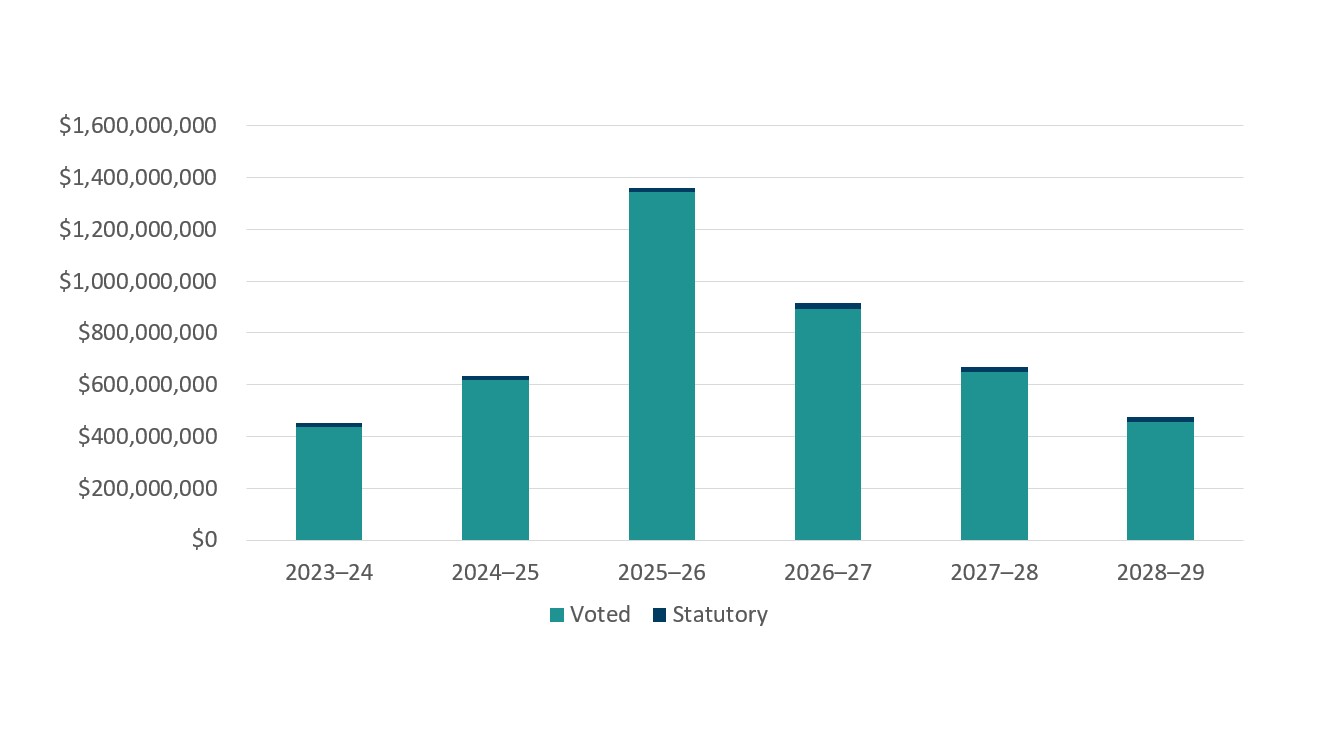
Graph 2 summarizes the department's approved voted and statutory funding from – to –.
-
Text description of graph 2
Text description of graph 2 Fiscal year Total Voted Statutory – $450,747,210 $436,254,186 $14,493,023 – $634,726,541 $618,547,312 $16,179,229 – $1,361,460,647 $1,344,102,422 $17,358,225 – $913,938,318 $894,223,373 $19,714,945 – $666,840,285 $647,472,872 $19,367,413 – $475,881,514 $457,271,450 $18,610,064 -
Analysis of statutory and voted funding over a six-year period
Approved funding variations are primarily driven by specific allocations for initiatives where funding exceeded the CSA's ongoing resource levels. The changes in the funding profile from – to – are mainly attributed to:
- New investment to ESA programs by $528.5 million in – as announced in .
- Implementation of reductions as per the Comprehensive Expenditure Review initiative as announced in the Budget.
- New investment in – and – to support the implementation of Canadarm3 as announced in Budget.
- Funding for the Lunar Exploration Accelerator Program (LEAP2.0-LUV) to help accelerate the development of new critical technologies for the lunar utility vehicle, as announced in Budget .
- Funding for the NASA-led Atmosphere Observing System (AOS) through the development of the Thin Ice Cloud in InfraRed Emissions (TICFIRE) instrument, as announced in Budget .
- Investments in the RADARSAT+ initiative to support immediate and future satellite Earth observation announced in .
- Support for Canada's ongoing participation in the International Space Station through 2030 as announced in Budget .
- Budget announced new funding for Canada's initial utilization activities for the Gateway.
- Funding for the WildFireSat mission, introduced in Budget .
For further information on the CSA's departmental appropriations, consult the – Main Estimates.
Future-oriented condensed statement of operations
The future-oriented condensed statement of operations provides an overview of the CSA's operations for – to –.
Table 9: Future-oriented condensed statement of operations for the year ended (dollars)
| Financial information | – Forecast results |
– Planned results | Difference (Planned results minus forecasted) |
|---|---|---|---|
| Total expenses | 1,120,224,042 | 648,545,985 | (471,678,057) |
| Total revenues | 49,421 | 48,824 | (597) |
| Net cost of operations before government funding and transfers | 1,120,174,621 | 648,497,162 | (471,677,459) |
Analysis of forecasted and planned results
Expenses
Total expenses, estimated on an accrual basis, are planned to be $607,777,381 in - resulting in an increase of $13,959,877 (2.4%) from – forecast.
The net positive variation is mainly due to an $12 million increase in "Professional and special Services" primarily attributed to the asset under construction, Canadarm3, for which several milestones are planned to be completed, leading to the payment of numerous contract milestones. Additionally, an increase is observed in other expenses such as amortization, accretion, and repair and maintenance. These increases are offset by decreases in transfer payments and Salaries and Employee Benefits.
Total expenses result in the above Future-oriented condensed statement of operations include planned spending presented in this Departmental Plan as well as other expenses not mentioned, such as amortization, accretion expenses related to asset retirement obligations, services provided without charge by other government departments, severance benefits and vacation pay liability adjustments.
The most important expenses are mainly amortization, professional and special services, salaries and fringe benefits as well as transfer payments.
Revenues
Total revenues are projected to be $1,780,691 in –. Most of CSA's revenues are non-respendable and are generated from the lending and use of public property, as well as other non-tax revenue generated from cost recovery from other governmental departments related to rented space. The Agency's respendable revenues are projected to be $48,824, representing revenues from Crown Asset Disposition and gain on foreign exchange.
A more detailed Future-Oriented Statement of Operations and associated Notes for –, including a reconciliation of the net cost of operations with the requested authorities, is available on the CSA's website.
Human resources
This section presents an overview of the department's actual and planned human resources from – to –.
Table 10: Actual human resources for core responsibilities and internal services
| Core responsibilities and internal services | – Actual full-time equivalents | – Actual full-time equivalents | – Forecasted full-time equivalents |
|---|---|---|---|
| Canada in Space | 507.7 | 516.2 | 645.2 |
| Internal services | 429.3 | 470.5 | 394.7 |
| Total | 937.0 | 986.7 | 1,039.9 |
Analysis of human resources over the last three years
Beginning with the – Departmental Plan, in line with practice amongst OGDs, the CSA has updated the methodology for allocating resources under its core responsibility and internal services. This new methodology better reflects the role that these resources play to support the Agency's core responsibility – Canada in Space, as internal services are directly involved with program delivery.
The number of full-time equivalents in Canada in Space increased by 27%, while Internal Services decreased by 8%. These variations are mainly the result of the update to the resource allocation methodology, as outlined above.
Table 11: Human resources planning summary for core responsibilities and internal services
| Core responsibilities and internal services | – Planned full-time equivalents | – Planned full-time equivalents | – Planned full-time equivalents |
|---|---|---|---|
| Canada in Space | 666.2 | 662.4 | 643.7 |
| Internal services | 366.3 | 363.7 | 345.4 |
| Total | 1,032.5 | 1,026.1 | 989.1 |
Analysis of human resources for the next three years
The variations from – to – in Canada in Space are mainly due to an increase in personnel to support the implementation of expanded activities under the Canadian space program. This includes growth in program-specific roles. As of –, the CSA has changed the allocation methodology for full-time equivalents under its core responsibility and Internal Services. This change better reflects the role that these resources play in supporting the Agency's core responsibility.
The decrease from – to – is primarily due to the implementation of reductions as per the Comprehensive Expenditure Review initiative as announced in the Budget.
Supplementary information tables
The following supplementary information tables are available on the CSA's website:
Information on the CSA's departmental sustainable development strategy can be found on the CSA's website.
Federal tax expenditures
The CSA's Departmental Plan does not include information on tax expenditures.
The tax system can be used to achieve public policy objectives through the application of special measures such as low tax rates, exemptions, deductions, deferrals and credits. The Department of Finance Canada publishes cost estimates and projections for these measures each year in the Report on Federal Tax Expenditures.
This report also provides detailed background information on tax expenditures, including descriptions, objectives, historical information and references to related federal spending programs as well as evaluations and GBA Plus of tax expenditures.
Corporate information
-
Departmental profile
Appropriate minister(s):
The Honourable Mélanie Joly, P.C., M.P.
Institutional head:
Lisa Campbell, President
Ministerial portfolio:
Innovation, Science and Economic Development
Enabling instrument(s):
Year of incorporation / commencement:
Established in
Other:
The CSA was established in . The Agency's headquarters are located at the John H. Chapman Space Centre, in Longueuil, Quebec. Other CSA workplaces include offices in the National Capital Region, and liaison offices in Houston, Washington, and Paris.
-
Departmental contact information
Mailing address:
6767 Route de l'Aéroport
Borough of Saint-Hubert
Longueuil, Quebec
J3Y 8Y9Telephone:
(450) 926-4800
Fax:
(450) 926-4352
Email:
Website(s):
Definitions
List of terms
- appropriation (crédit)
- Any authority of Parliament to pay money out of the Consolidated Revenue Fund.
- budgetary expenditures (dépenses budgétaires)
- Operating and capital expenditures; transfer payments to other levels of government, departments or individuals; and payments to Crown corporations.
- core responsibility (responsabilité essentielle)
- An enduring function or role performed by a department. The intentions of the department with respect to a core responsibility are reflected in one or more related departmental results that the department seeks to contribute to or influence.
- Departmental Plan (plan ministériel)
- A report on the plans and expected performance of an appropriated department over a 3year period. Departmental Plans are usually tabled in Parliament each spring.
- departmental result (résultat ministériel)
- A consequence or outcome that a department seeks to achieve. A departmental result is often outside departments' immediate control, but it should be influenced by program-level outcomes.
- departmental result indicator (indicateur de résultat ministériel)
- A quantitative measure of progress on a departmental result.
- departmental results framework (cadre ministériel des résultats)
- A framework that connects the department's core responsibilities to its departmental results and departmental result indicators.
- Departmental Results Report (rapport sur les résultats ministériels)
- A report on a department's actual accomplishments against the plans, priorities and expected results set out in the corresponding Departmental Plan.
- full-time equivalent (équivalent temps plein)
- A measure of the extent to which an employee represents a full person-year charge against a departmental budget. For a particular position, the full-time equivalent figure is the ratio of number of hours the person actually works divided by the standard number of hours set out in the person's collective agreement.
- gender-based analysis plus (GBA Plus) (analyse comparative entre les sexes plus [ACS Plus])
-
Is an analytical tool used to support the development of responsive and inclusive policies, programs, and other initiatives. GBA Plus is a process for understanding who is impacted by the issue or opportunity being addressed by the initiative; identifying how the initiative could be tailored to meet diverse needs of the people most impacted; and anticipating and mitigating any barriers to accessing or benefitting from the initiative. GBA Plus is an intersectional analysis that goes beyond biological (sex) and socio-cultural (gender) differences to consider other factors, such as age, disability, education, ethnicity, economic status, geography (including rurality), language, race, religion, and sexual orientation.
Using GBA Plus involves taking a gender- and diversity-sensitive approach to our work. Considering all intersecting identity factors as part of GBA Plus, not only sex and gender, is a Government of Canada commitment.
- government priorities (priorités gouvernementales)
- For the purpose of the – Departmental Plan, government priorities are the high-level themes outlining the government's agenda in the most recent Speech from the Throne.
- horizontal initiative (initiative horizontale)
- An initiative where two or more federal departments are given funding to pursue a shared outcome, often linked to a government priority.
- Indigenous business (entreprise autochtones)
- Requirements for verifying Indigenous businesses for the purposes of the departmental result report are available through the Indigenous Services Canada Mandatory minimum 5% Indigenous procurement target website.
- non‑budgetary expenditures (dépenses non budgétaires)
- Non-budgetary authorities that comprise assets and liabilities transactions for loans, investments and advances, or specified purpose accounts, that have been established under specific statutes or under non-statutory authorities in the Estimates and elsewhere. Non-budgetary transactions are those expenditures and receipts related to the government's financial claims on, and obligations to, outside parties. These consist of transactions in loans, investments and advances; in cash and accounts receivable; in public money received or collected for specified purposes; and in all other assets and liabilities. Other assets and liabilities, not specifically defined in G to P authority codes are to be recorded to an R authority code, which is the residual authority code for all other assets and liabilities.
- performance (rendement)
- What a department did with its resources to achieve its results, how well those results compare to what the department intended to achieve, and how well lessons learned have been identified.
- performance indicator (indicateur de rendement)
- A qualitative or quantitative means of measuring an output or outcome, with the intention of gauging the performance of an department, program, policy or initiative respecting expected results.
- plan (plan)
- The articulation of strategic choices, which provides information on how a department intends to achieve its priorities and associated results. Generally, a plan will explain the logic behind the strategies chosen and tend to focus on actions that lead to the expected result.
- planned spending (dépenses prévues)
-
For Departmental Plans and Departmental Results Reports, planned spending refers to those amounts presented in Main Estimates.
A department is expected to be aware of the authorities that it has sought and received. The determination of planned spending is a departmental responsibility, and departments must be able to defend the expenditure and accrual numbers presented in their Departmental Plans and Departmental Results Reports.
- program (programme)
- Individual or groups of services, activities or combinations thereof that are managed together within the department and focus on a specific set of outputs, outcomes or service levels.
- program inventory (répertoire des programmes)
- Identifies all the department's programs and describes how resources are organized to contribute to the department's core responsibilities and results.
- result (résultat)
- A consequence attributed, in part, to a department, policy, program or initiative. Results are not within the control of a single department, policy, program or initiative; instead they are within the area of the department's influence.
- statutory expenditures (dépenses législatives)
- Expenditures that Parliament has approved through legislation other than appropriation acts. The legislation sets out the purpose of the expenditures and the terms and conditions under which they may be made.
- target (cible)
- A measurable performance or success level that a department, program or initiative plans to achieve within a specified time period. Targets can be either quantitative or qualitative.
- voted expenditures (dépenses votées)
- Expenditures that Parliament approves annually through an appropriation act. The vote wording becomes the governing conditions under which these expenditures may be made.