
RADICALS: a Canadian mission to monitor space radiation
Launch: No earlier than
Status: In development
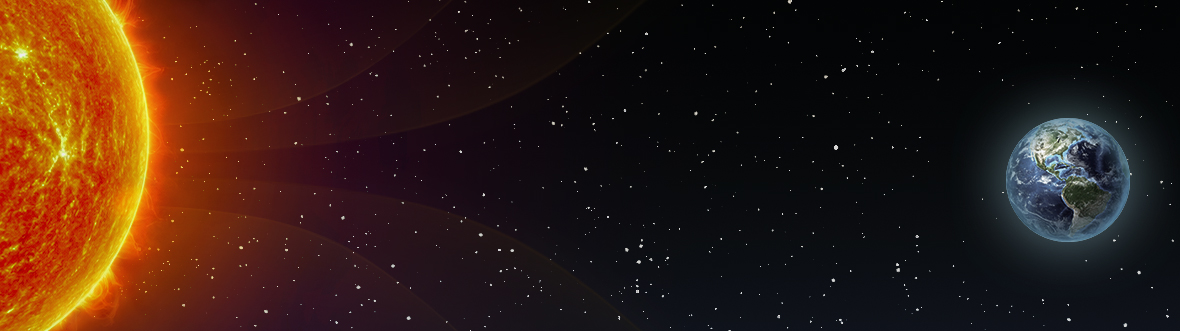
Beyond Earth, space is filled with powerful radiation including particles from the Sun. Luckily, the magnetic field and the atmosphere of our planet block most of these harmful rays.
But during solar storms, some of this radiation can get through those protections. This can affect Earth's climate and even disrupt technologies, like GPS and power grids.
The RADiation Impacts on Climate and Atmospheric Loss Satellite (RADICALS) is a Canadian satellite mission led by the University of Alberta in partnership with SFL Missions Inc. It will study how radiation from space enters Earth's atmosphere and how it affects the climate. It will orbit about 550 to 600 km above Earth and observe high-latitude regions such as the Arctic.
Improving preparedness for space weather events
RADICALS will help scientists better understand how space radiation behaves near Earth. It will:
- Improve understanding of how the Sun interacts with Earth's magnetic field
- Support the long-term study of space weather effects and improve climate models
- Support better forecasting of space weather and its impacts on the upper atmosphere
- Improve understanding of how space storms affect technologies like GPS, especially in polar regions
How RADICALS works
RADICALS will pass over the same locations, including Canada's northern and Arctic regions, at the same local time each day. Operating in a polar low-orbit, where space-weather activity is active, the satellite will help scientists collect consistent and comparable measurements of atmospheric conditions.
The satellite carries X-ray imagers, a high-energy particle telescope and magnetometers. These instruments will:
- Measure tiny particles like electrons and ions
- Observe changes in Earth's magnetic field
- Detect bursts of energy when particles hit the atmosphere
The University of Calgary is building one of the two X-ray imagers, while the University of Alberta is developing the other instruments. Students take part in designing and testing the components. In doing so, they carry forward the legacy of Ex-Alta 1, a student-built CubeSat launched in 2017.
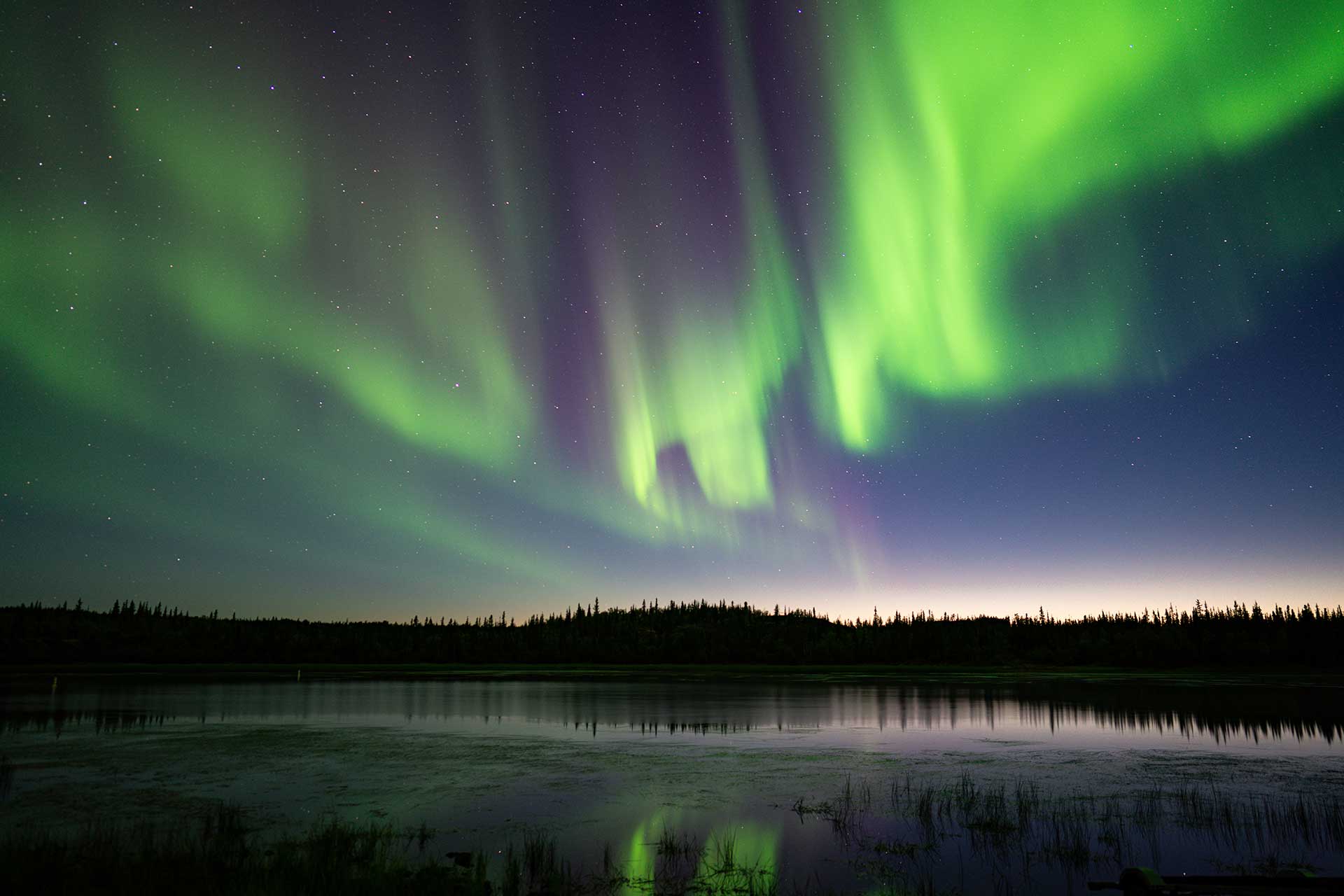
Auroras happen when charged particles collide with Earth's upper atmosphere.
Auroras: space weather in action
Auroras are beautiful light displays. They occur when particles from the Sun interact with Earth's atmosphere. They produce glowing colours like green, purple, and red.
They are most common near the polar regions, including the Canadian Arctic, where Earth's magnetic field directs solar particles into the atmosphere.
Expected benefits to Canadians
The mission will help Canada better prepare for major space weather events like solar storms. It will also help understand how space radiation can affect the technology we use every day.
- Better climate science: New data collected will improve the accuracy of our climate models. This will lead to better forecasts.
- Stronger satellite protection: New findings on radiation storms will help operators better protect their equipment. This will make it easier to keep spacecraft safe and performing as planned.
- Outage readiness: Greater insight into space weather will help predict disruptions to GPS and radio signals. This will allow populations in remote locations like the Arctic to plan for outages.
A predominantly collaborative Canadian effort
Supported by funding from the Canadian Space Agency, the University of Alberta is leading the RADICALS mission in partnership with SFL Missions Inc. based in Toronto. The mission also receives support from the Canadian Foundation for Innovation, the Government of Alberta, and Natural Resources Canada.
Other Canadian universities include:
- University of Calgary
- University of Saskatchewan (Institute of Space and Atmospheric Studies)
- Athabasca University
- University of New Brunswick
International collaborator:
- University of Colorado (U.S.)
This mission continues Canada's tradition of leadership in space and atmospheric science. It will help strengthen the country's contribution to global climate research.