
The Artemis campaign: humanity's return to the Moon

The Canadian Space Agency (CSA) is updating its website to align with the latest Artemis program updates announced by NASA in .
The global space community is undertaking Artemis, a multi-mission campaign designed to push human space exploration deeper into space to the Moon and on to Mars.
What is the Artemis campaign?
The Artemis campaign is a new chapter of lunar exploration designed to send humans farther into space than ever before.
An international collaboration led by NASA, with contributions from the European Space Agency, the CSA, the Japan Aerospace Exploration Agency and the Mohammed bin Rashid Space Centre of the United Arab Emirates, and the participation of several companies, the campaign builds the expertise for a lasting return to the Moon. The campaign also lays an important foundation for deep-space exploration to more distant destinations like Mars.
Like the Apollo program over 50 years ago, Artemis begins with missions around the Moon before a mission that lands on the lunar surface. In addition to crewed and uncrewed missions, the Artemis campaign includes the construction of Gateway, a space station in orbit around the Moon.
According to current plans, designed to support human presence on and around the lunar surface, astronauts would travel from Gateway to the Artemis Base Camp using the Human Landing System.
In return for contributing Canadarm3, a next-generation robotic system, to Gateway, Canada receives a range of opportunities for lunar science, technology demonstration and commercial activities, as well as two astronaut flights to the Moon. CSA astronaut Jeremy Hansen is part of Artemis II, the first crewed mission to the Moon since .
What are the Artemis missions?
The Artemis missions are increasingly complex endeavours that lay the foundation for sustainable human and robotic exploration of Earth's only natural satellite, the Moon.
Missions include:
- Artemis I, an uncrewed test flight of the Orion spacecraft, launched on the Space Launch System (SLS) rocket on ;
- Artemis II, the first-ever crewed test flight of the Orion spacecraft, launched on ;
- Artemis III, currently targeted for , will test out systems and capabilities in low Earth orbit to prepare for Artemis IV; and
- Artemis IV, currently targeted for , will fly astronauts to the Moon. The mission will land humans on the lunar surface.
During later missions, astronauts will dock Orion to Gateway, a small space station to which Canada is contributing Canadarm3. Gateway is critical to sustainable lunar exploration and will serve as a model for future missions to Mars. From Gateway, astronauts will be able to venture to the lunar surface.

This ambitious campaign is named after the mythological figure Artemis, who is both Apollo's twin sister and Goddess of the Moon and the hunt. These missions will also prepare and propel us onward to Mars. As the "torch bringer," Artemis will light the way for human exploration of the red planet.
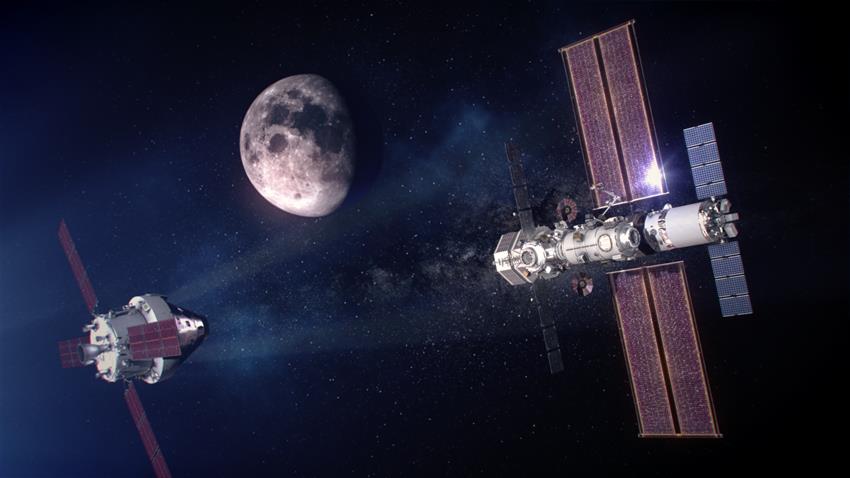
An artist's concept of the Orion spacecraft approaching Gateway. (Credit: NASA)
In , the CSA awarded a grant of $300,000 to Western University, whose scientist Dr. Gordon “Oz” Osinski was selected to be part of NASA's Artemis Geology Team. The team will support the planning and operations of the Artemis missions, including designing the geology surface campaign of the astronauts on the Moon, to ensure that missions achieve their scientific objectives. Oz also leads geology field expeditions that are part of the CSA astronauts' training.
Artemis I: the first launch of the SLS with Orion
Artemis I provided a foundation for human deep-space exploration. As an uncrewed test flight, Artemis I demonstrated the performance of the SLS rocket. The launch of Artemis I took place on .
During this flight, the Orion spacecraft launched from Florida on the SLS and ventured thousands of kilometres beyond the Moon. Orion's systems were then monitored to ensure a safe Crew Module re-entry, splashdown, and recovery. Returning to Earth on , Orion stayed in space longer than any spacecraft built for astronauts ever has without docking to a space station.
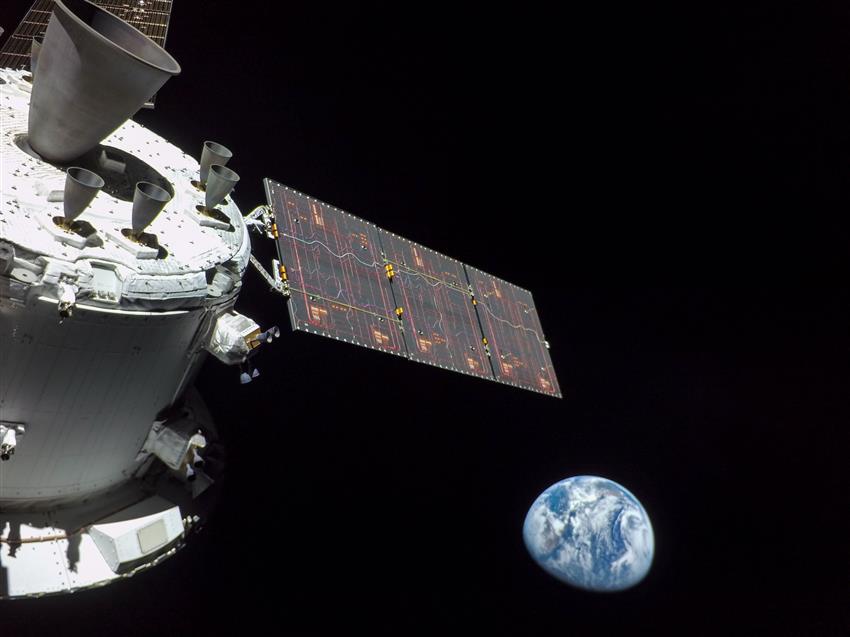
On the first day of the Artemis I mission, this image of Earth was captured as Orion heads to the Moon. (Credit: NASA)
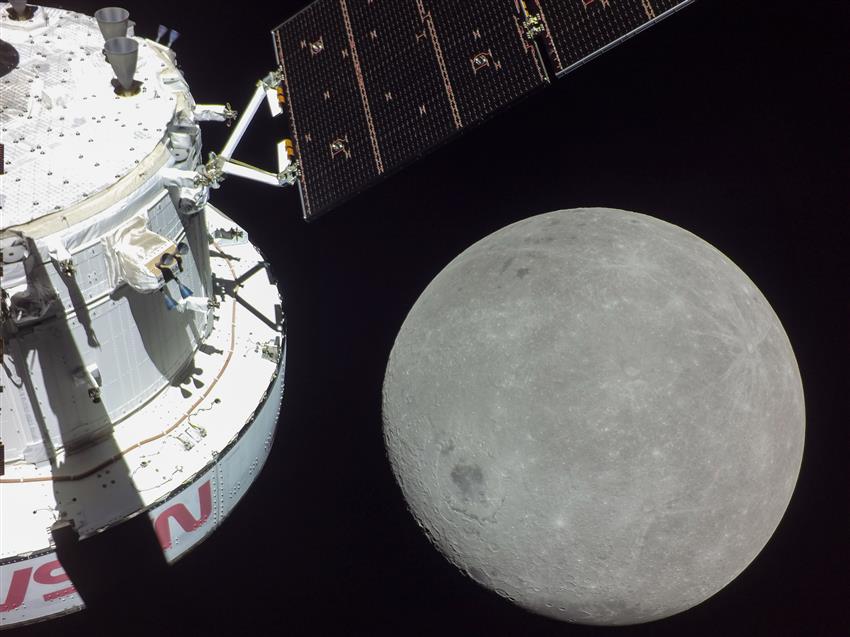
A camera on the tip of Orion's solar array captures the uncrewed Orion capsule and the far side of the Moon six days into the Artemis I mission. (Credit: NASA)

Both Earth and the Moon are visible in this image that Orion captured as the spacecraft reached its maximum distance from Earth on day 13 of the Artemis I mission. (Credit: NASA)
Artemis II: the first crewed mission around the Moon in half a century
Canadian Space Agency astronaut Jeremy Hansen is part of Artemis II, the first crewed mission to the Moon since . This historic mission, launched on , made Canada the second country to have an astronaut fly around the Moon.
Like the crew of Apollo 8, Artemis II astronauts witnessed the "Earthrise," a breathtaking view of our planet suspended in the blackness of space.
In addition to being the second test flight of the SLS, this important mission allowed a crew of four astronauts to monitor several vital factors, including:
- mission planning
- system performance
- crew interfaces
- guidance and navigation systems
Take a ride around the Moon with the Artemis II crew by watching this mission overview video! (Credits: CSA, NASA)
Transcript of the video entitled Artemis II – Canada on its way to the Moon
The crewed Orion spacecraft took a unique trajectory known as "hybrid free return," circling our planet twice to gain enough speed to travel the distance to the Moon. Once there, Orion used the Moon's gravity to slingshot around the far side and return to Earth.
The mission launched from NASA's Kennedy Space Center in Florida and splashed down in the Pacific Ocean.
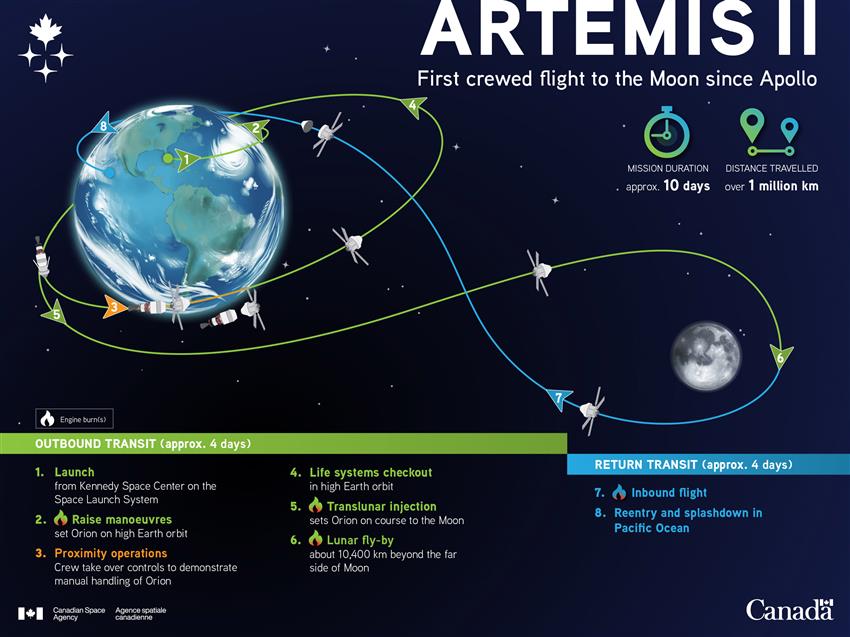
During Artemis II, four astronauts flew around the Moon in the Orion capsule. The nearly 10-day flight test paved the way for lunar surface missions. (Credits: CSA, NASA)
In his first vlog of , CSA astronaut Jeremy Hansen reflects on coming together to achieve big goals and how he thinks he will react when he sees our home planet from the perspective of the Moon. (Credits: CSA, NASA, Fulwell 73 UK Limited)
Transcript of the video entitled Vlog 6: One tiny marble in space
Christina Koch, NASA astronaut and Mission Specialist on Artemis II, reflects on the space collaboration between Canada and the United States. Our collaboration spans from the iconic Canadarm and Canadarm2 to missions like Expedition 59, Artemis II and upcoming Gateway. (Credits: CSA, NASA)
Transcript of the video entitled Beyond borders: A celebration of US–Canada space collaboration
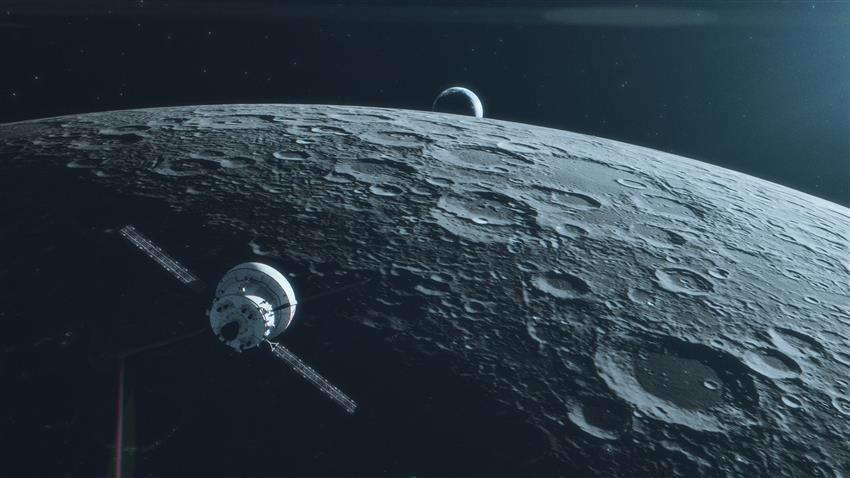
The Orion spacecraft will use the gravitational forces of Earth and the Moon to help propel itself during the Artemis missions. (Credit: NASA/Liam Yanulis)
Maintaining a lunar future
For long-term operations, Gateway provides a staging point for human and robotic lunar missions. The orbiting outpost will support longer expeditions on the Moon, and potentially multiple trips to the surface during a single Artemis mission.
The Gateway-to-surface operational system is similar to how a human Mars mission may be designed - with the ability for some crew to remain in orbit and others to go to the surface. It is important to gain experience using this system on the Moon before the first human missions to Mars.
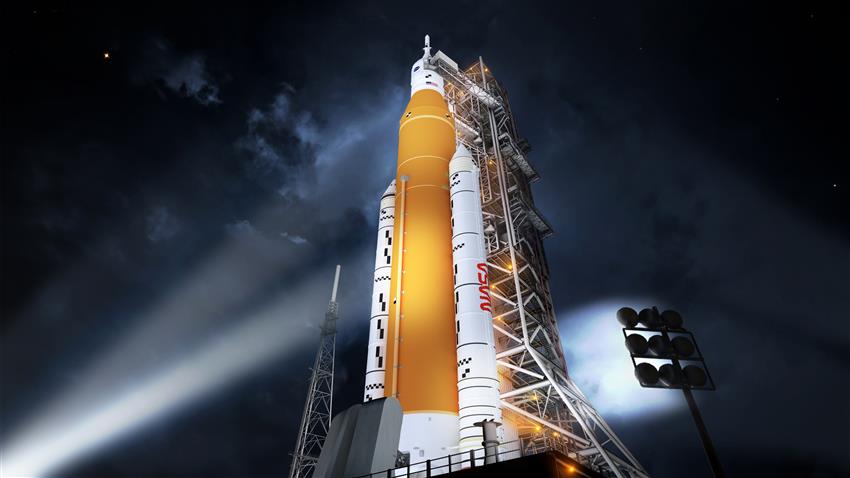
An artist's concept of NASA's SLS. Weighing over 2.6 million kilograms, this configuration was used to launch the first Artemis mission to the Moon. (Credit: NASA/MSFC)