
MVIS: Shielding science experiments from vibrations

The Microgravity Vibration Isolation Subsystem (MVIS) was a Canadian technology that used a magnetic field to protect science experiments from vibrations aboard the International Space Station.
Background
Space is ideal for testing various phenomena in the absence of gravity. However, many vibrations are produced aboard the Space Station, for example, when:
- an astronaut works out on a treadmill
- solar panels and antennas rotate
- a fan or motor starts up
- a spacecraft docks to the Station
These jolting movements can be strong enough to interfere with delicate experiments, like those involving fluid physics, crystal growth and the development of metal alloys.
MVIS used a series of electromagnet coils and magnets to suspend its inner container and to guard against vibrations that could have altered the results of those experiments.
Developed by the Canadian Space Agency (CSA), the microwave-sized device was added to the International Space Station's Fluid Science Laboratory in .
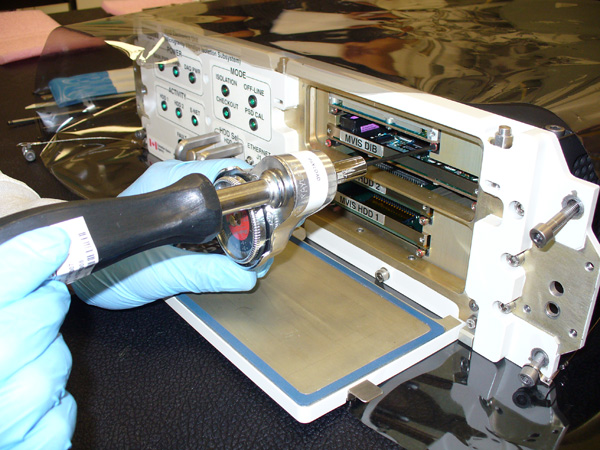
The Microgravity Vibration Isolation Subsystem (MVIS). (Credit: CSA)
Objectives
MVIS was designed to:
- provide a smoother environment for conducting experiments in microgravity
- demonstrate the adaptability of its technology to different environments

An engineer at the David Florida Laboratory prepares MVIS for launch to the International Space Station. (Credit: CSA)
How it worked
MVIS used a magnetic field to keep an inner chamber in suspension. Delicate science experiments were conducted inside the magnetically suspended container.
Sensors and an onboard computer monitored and controlled the inner container's position to ensure it remained stable within the limits needed for the experiment.

To suspend its inner chamber, MVIS used magnetic levitation. On Earth, the most common application of this physical principle is in maglev trains, which hover above their magnetic tracks and can accelerate and slow down much faster than traditional trains.
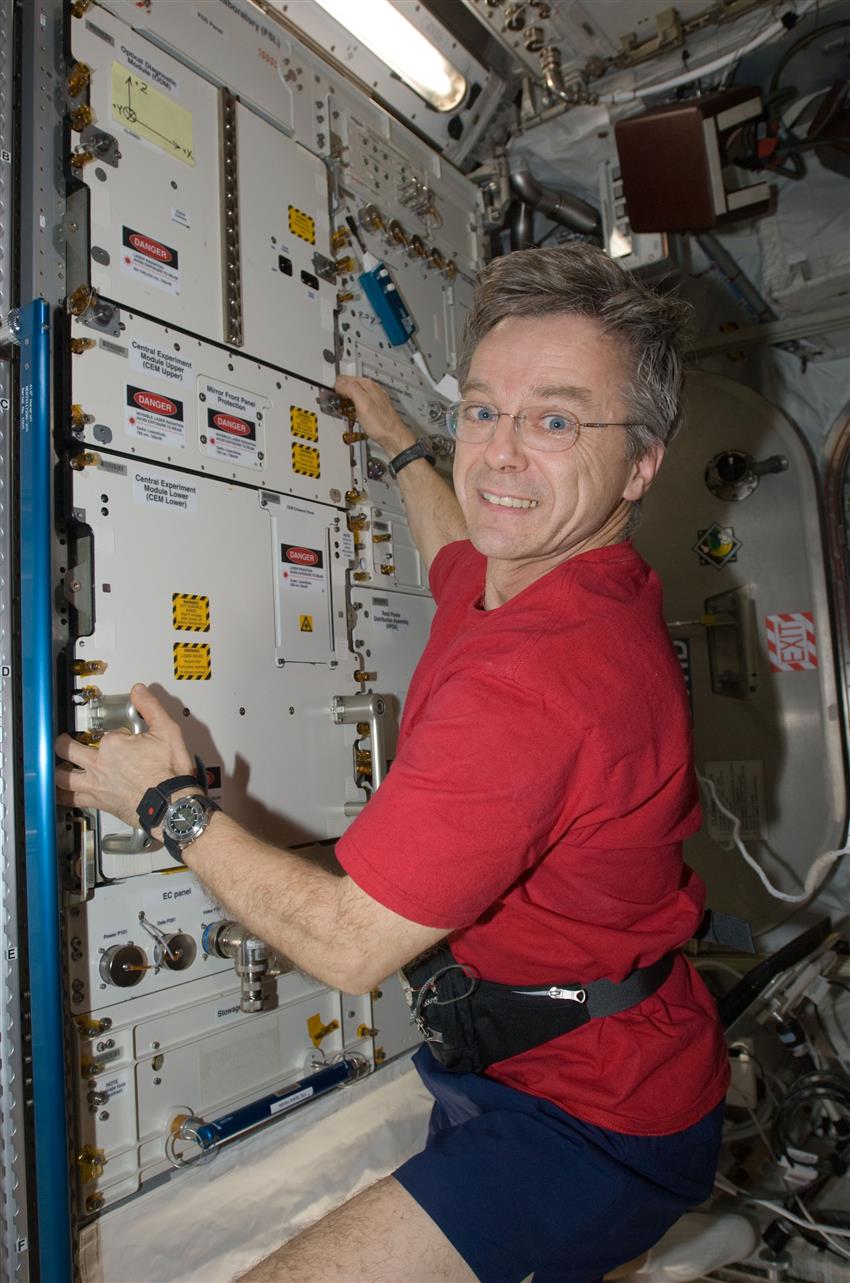
CSA astronaut Robert Thirsk activates MVIS in the Fluid Science Laboratory aboard the International Space Station. (Credit: NASA)
Timeline
The project was first developed in by the CSA as a contribution to the European Space Agency's Fluid Science Laboratory.
MVIS was installed on the International Space Station in .
The European Space Agency plans to decommission the Fluid Science Laboratory, including MVIS, in late .
Research team
Partners
- Magellan Aerospace Corporation (Bristol Aerospace Ltd.), Winnipeg
- MacDonald, Dettwiler and Associates Ltd., Montreal
- École de technologie supérieure, Montreal
- SENER Engineering and Construction, Spain
- European Space Agency