
ACTIS: Helping detect blood clots in space
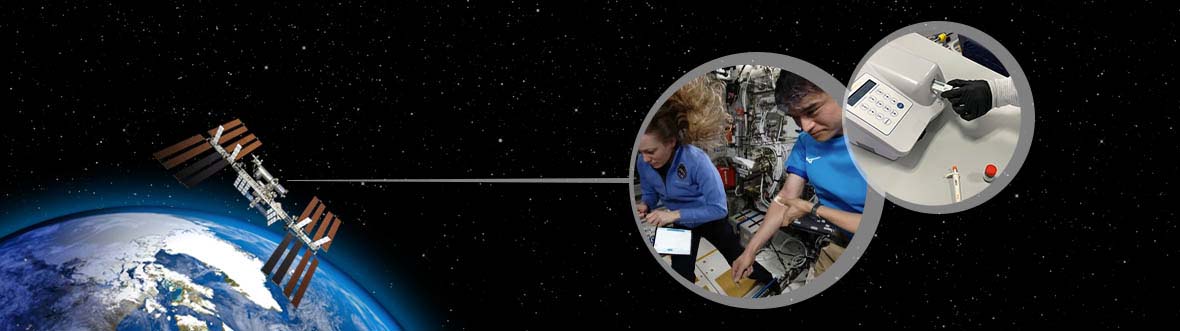
Acute Care Testing in Space (ACTIS) is a portable device that tests astronaut blood samples on the International Space Station.
ACTIS is designed to measure levels of D-dimer, a protein fragment found when a blood clot forms and starts to break down, in astronauts. This measurement can help medical teams enquire further for a possible blood clot and make decisions about care.
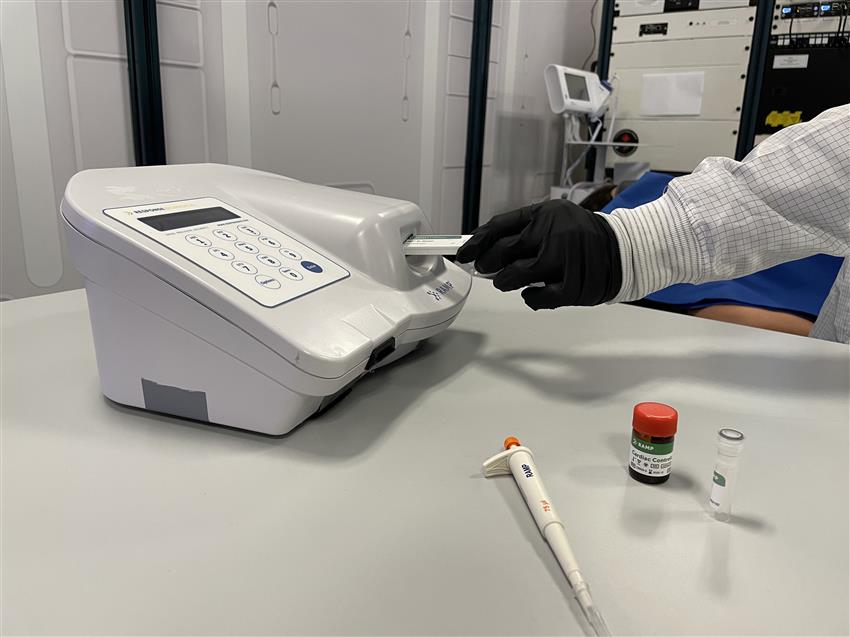
ACTIS during tests. (Credit: CSA)
Background
For decades, researchers have studied how long-duration space missions affect astronauts' health. In recent years, blood clots have been found in the veins of some International Space Station crewmembers. Medical teams need tools like ACTIS to detect them as early as possible.
Before ACTIS can be used for medical care in space, it will first be tested on the Station to ensure it works safely and provides reliable results in space. If the test is successful, ACTIS could support future medical care and research in space.
ACTIS could also be useful for future deep-space missions. As we prepare to explore further in the solar system and establish a long-term human presence on the Moon, astronauts will need medical help and supplies that will keep them safe and healthy for months at a time, without relying on immediate support from Earth.
Objective
ACTIS aims to provide precise measurements of D-dimer levels in astronauts' blood. While a D-dimer result alone cannot confirm a blood clot or predict whether an astronaut will develop one, it can help medical teams make informed decisions about healthcare.
How it works
- Crewmembers prepare a blood sample and put it into a single-use cartridge, a step expected to take less than 15 minutes.
- The cartridge is inserted into the ACTIS device, which measures the level of D-dimer within 15 minutes.
- The result is are displayed on the device and shared with medical teams on Earth.
Timeline
The Canadian Space Agency (CSA) team has tested ACTIS to ensure the device works as expected, including during a parabolic flights campaign. ACTIS was launched into space in to be tested during CSA astronaut Joshua Kutryk's mission. Testing on the International Space Station will help assess how ACTIS performs in microgravity and confirm if the device is ready for future use in space.
Developers
ACTIS is based on a commercially available device called RAMP Reader, manufactured by Response Biomedical (Vancouver, BC) and distributed by Somagen Diagnostics (Edmonton, Alberta). RAMP reader has been used for many years on Earth. ACTIS represents its first planned use in space.