
ACTIS: Assessing astronauts' blood clot risks
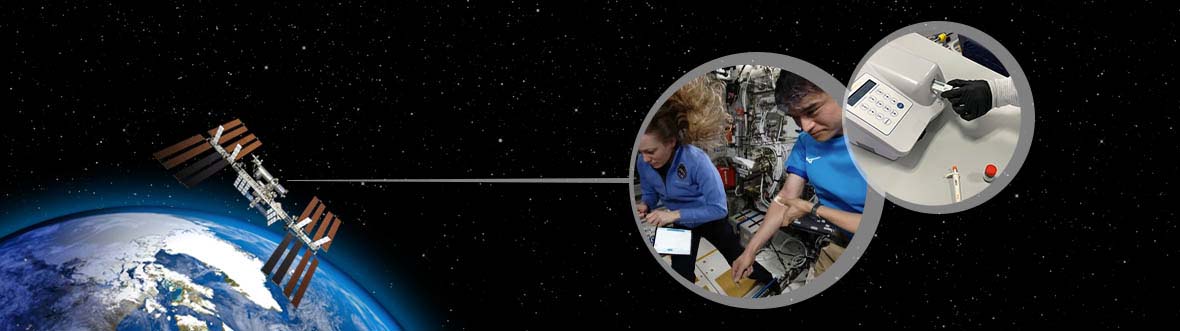
ACTIS (Acute Care Testing in Space) is a portable device designed to enable assessment of blood clot risks in astronauts onboard the International Space Station.
This technology measures levels of D-Dimer, a protein fragment produced when blood clots break down. Blood clots are a growing area of medical concern in the field of space exploration: not only can they pose serious medical challenges, but they also require immediate attention, which is often possible far from Earth.
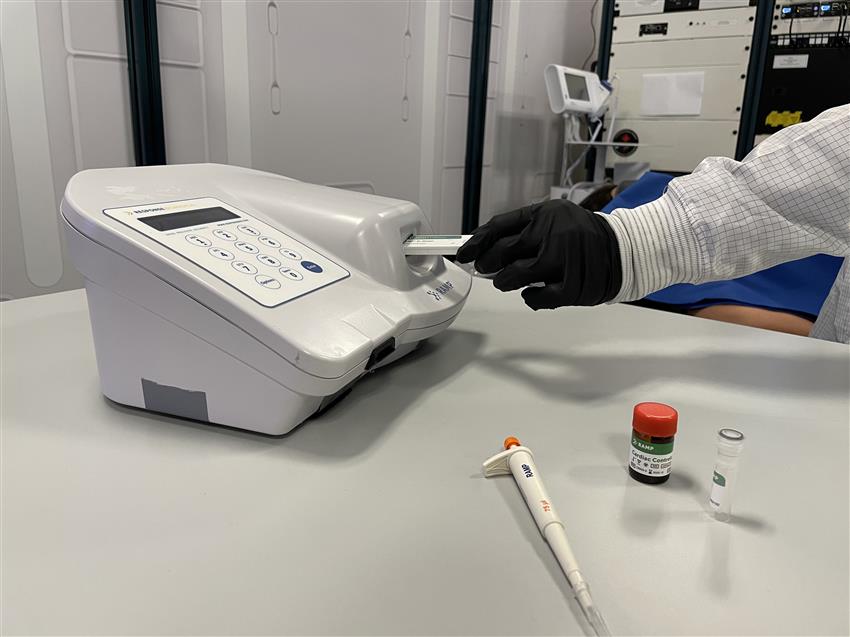
ACTIS during tests. (Credit: CSA)
Background
For decades, researchers have been trying to understand how long-duration space missions affect astronauts' health. In recent years, ultrasound studies have led to the discovery of blood clots in certain International Space Station crewmembers' veins. To clinically assess and manage the risk of blood clots in space, medical teams need reliable tools to detect them as early as possible.
ACTIS will be tested on the Station and, if proven successful, could be integrated into the International Space Station's standard medical operations, future missions and scientific investigations.
Beyond its immediate application to the Station, ACTIS could also become a valuable technology for future deep-space missions. As we prepare to explore further in the solar system and establish a long-term human presence on the Moon, astronauts will need technologies that will keep them safe and healthy for months at a time. As missions become longer and more distant, opportunities for medical resupply or emergency evacuation will become increasingly limited and complex, making early diagnosis and autonomous medical capabilities more important than ever.
Objective
ACTIS aims to enable accurate, near-real-time assessment of blood clot risks during missions onboard the International Space Station.
How it works
- Crewmembers prepare the blood sample and insert it into a cartridge: a step expected to take less than 15 minutes.
- ACTIS performs the analysis within 15 minutes of cartridge insertion, searching for D-Dimer traces in the sample.
- Results are displayed on the device and can be transmitted to the ground team.
Timeline
The Canadian Space Agency (CSA) team has thoroughly tested ACTIS to ensure it meets the high standards of space medical devices, including testing during a parabolic flight campaign. ACTIS will be launched into space in and tested during CSA astronaut Joshua Kutryk's mission.
Developers
ACTIS is based on a device called RAMP Reader, manufactured by Response Biomedical (Vancouver, BC) and distributed by Somagen Diagnostics (Edmonton, Alberta). This device has been used for many years on Earth for a variety of medical tests.