
CubeSat Mission 1: Monitoring Earth's ozone layer from a small satellite
- Launch:
- Mission duration: 12 months
- Mission status: In development
Building on Canada's heritage in atmospheric science, the Canadian Space Agency's (CSA) CubeSat Mission 1 (CM-1) will test new technologies that could support future satellite missions dedicated to monitoring Earth's atmospheric composition. It will also help determine whether a smaller, lower-cost satellite, known as a CubeSat, can contribute to the long-term monitoring of Earth's atmosphere.
Mission objectives
CM-1 has two main objectives:
- Validate the Osiris-3 optical spectrograph instrument to continue the legacy of Canada's OSIRIS instrument flown on Sweden's Odin mission and designed to measure atmospheric components such as ozone.
- Demonstrate the use of a CubeSat platform for future ozone measurements.

Missions that observe Earth's atmosphere help scientists better understand environmental change and provide information that supports the protection of our planet.
What will be measured
This mission will observe three key components of the atmosphere:
- Ozone (O₃): Helps protect life on Earth from the Sun's harmful ultraviolet radiation
- Nitrogen dioxide (NO₂): A trace gas that influences the chemical processes that create and break down ozone
- Stratospheric aerosols: Tiny particles in the upper atmosphere that affect atmospheric conditions and help scientists better understand changes in ozone over time
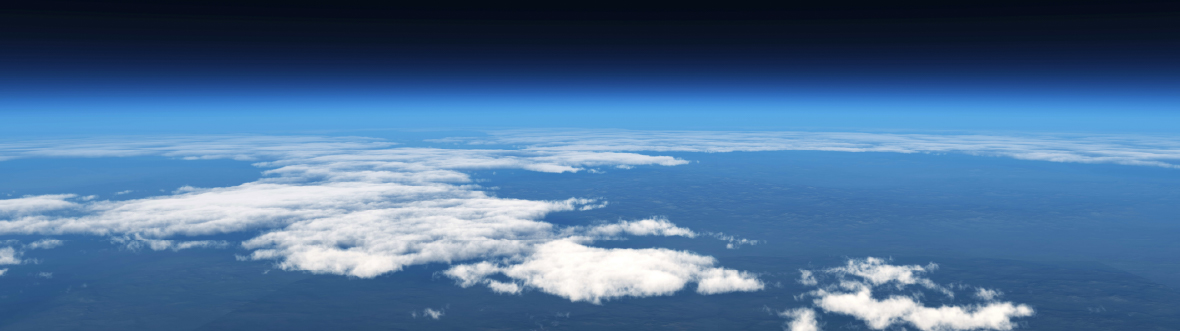
Using a technique called limb viewing, the satellite will observe the atmosphere near Earth's horizon, allowing scientists to study how these substances vary with altitude.
CM-1 will help scientists monitor seasonal changes in the ozone layer and improve understanding of the processes that drive those changes.
Benefits on Earth
CM-1 will:
- Advance Canadian capabilities in atmospheric monitoring from small satellites
- Support long-term ozone monitoring and research
- Improve understanding of atmospheric change and recovery of the ozone layer
- Help prepare for future, more advanced atmospheric science missions
Collaborators
CM-1 is a collaboration between the CSA, academia and industry.
The CSA is responsible for the overall mission and will be leading the integration of the Osiris-3 payload with the CubeSat, overseeing system-level testing, and managing mission implementation and operations. The CSA will also undertake the procurement of launch services required to place the satellite into its operational orbit.
The University of Saskatchewan will develop the mission's Osiris-3 instrument, a payload specifically designed for a CubeSat platform and will lead its design, development, manufacturing, testing and operational support.
A selected contractor will provide the satellite platform and support spacecraft development activities.