
Beyond borders: Calian's impact from safer air travel to deep-space communications
Over the past two decades, Ottawa-based Calian Group has expanded its activities in Canada's defence, space, health and technology sectors. Central to this success has been the Canada–European Space Agency (ESA) Cooperation Agreement, a powerful catalyst that has opened the door to international missions and global markets.
Thanks to this Agreement, Calian has expanded far beyond Canada's borders. By leveraging access to ESA programs, the company has delivered advanced communications technologies around the world, driving progress in deep-space exploration, next-generation satellite networks and modern aviation.
Supporting deep-space exploration
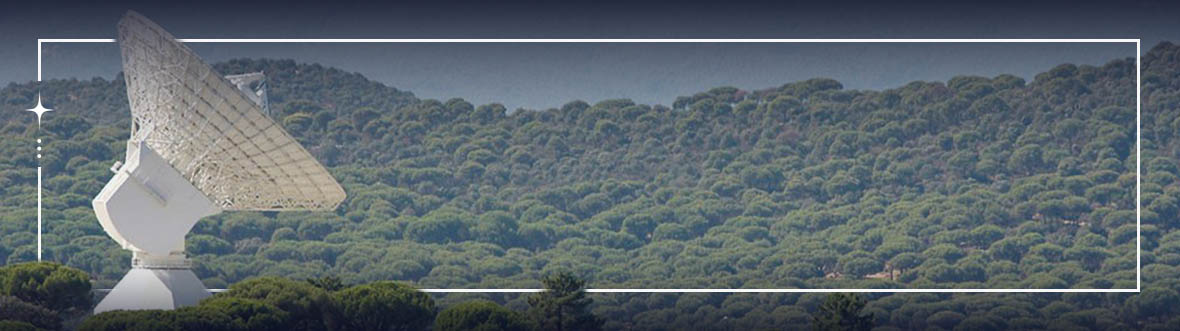
In the late 1990s, ESA set out to build its own deep-space antenna network to support its inter-planetary missions. Through the Agreement, Calian secured contracts to help bring that vision to life.
The company delivered three major antennas in Australia, Spain, and Argentina. These antennas enable spacecraft to transmit data across vast distances back to Earth and have supported landmark missions, including Rosetta's historic comet landing in 2014.
Beyond their scientific impact, these projects generated over $100 million in contracts for Calian and helped establish a unique Canadian expertise in deep-space communications.
Advancing next-generation satellite communications
As demand for faster, higher-capacity satellite communications grew, new high-frequency radio technologies, known as Q- and V-band, emerged as a promising solution. These technologies can carry much larger amounts of data than traditional satellite communications systems, enabling faster and more capable networks. However, they required entirely new ground-based antenna infrastructure capable of operating at these frequencies.
Through ESA's ARTES program, with funding from the Canadian Space Agency (CSA), Calian developed and tested these advanced antenna systems.
That early investment paid off. Calian went on to secure a contract worth over US$100 million, the largest in its history, to deploy Q/V-band systems in the United States, along with additional international opportunities.
This success shows how targeted support at the right time can open doors to global markets.
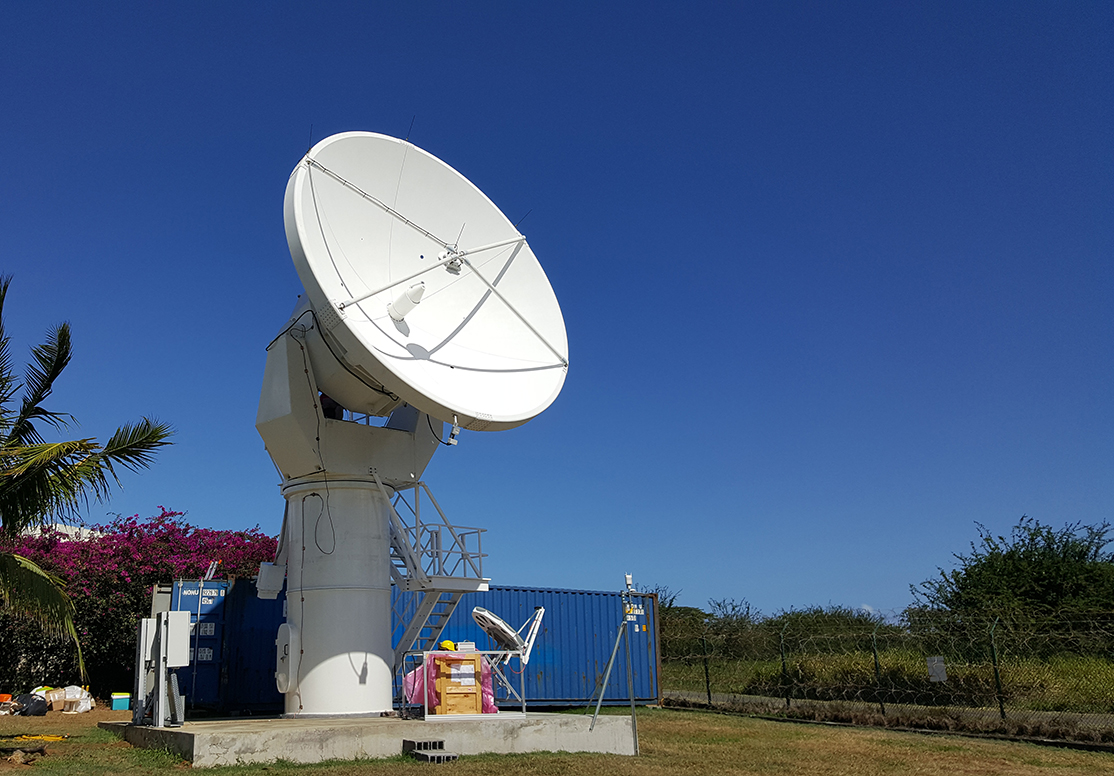
Q/V antenna in Guadeloupe. (Credit: Calian)
Modernizing air traffic communications
Air traffic systems are reaching their limits, relying on older communication methods that struggle to keep up with growing demand.
ESA's Iris program offers a modern alternative: satellite-based communications between pilots and air traffic controllers.
Calian provides critical ground network infrastructure that connects this space-based system to terrestrial air traffic management networks, enabling seamless and reliable data exchange.
The result is more efficient flight paths, fewer delays, and reduced CO₂ emissions, demonstrating how space-based solutions can deliver tangible environmental benefits here on Earth.
A stronger position on the global stage
Calian's work across these projects illustrates the strength of Canada's space and communications sector – and the strategic value of the Canada–ESA Cooperation Agreement.
With support from the CSA and collaboration with international partners, Calian has developed technologies that serve global needs while generating economic benefits at home.
From deep-space missions to high-speed connectivity and safer air travel, these achievements show how Canadian expertise can scale beyond borders and help shape the future of space and communications.