
Canadian Active Neutron Spectrometer: Detecting space radiation in real time
Health science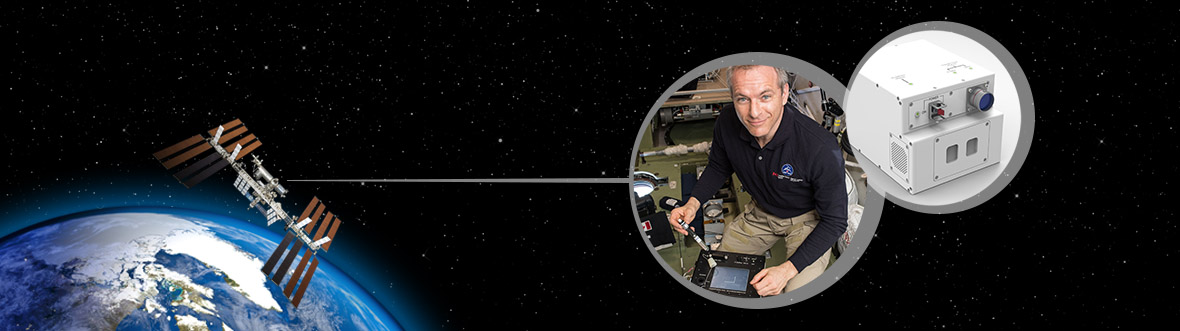
Background
Radiation exposure is one of the key medical challenges that astronauts face when living and working on the International Space Station. As the international community begins to plan missions to the Moon, understanding radiation exposure is critical for protecting astronaut health.
Canada has participated in several radiation detection experiments on the Station already:
- MOSFET: A tool to measure radiation levels that was initially developed for radiation detection in the nuclear and medical fields but was adapted for space use, leading the way to subsequent experiments.
- EVARM: This experiment collected data on radiation exposure during spacewalks to certain areas of the body, helping improve a radiation detector that is now being used in cancer clinics worldwide.
- Radi-N and Radi-N2: Using bubble detectors, these experiments gathered data on neutron radiation levels in different areas of the Station, showing that astronauts on the Station receive doses of neutron radiation hundreds of times higher than we receive on Earth.
Canadian Active Neutron Spectrometer (CANS) is an improvement on the equipment that has been used in these past Canadian experiments. It provides continuous data and works autonomously. Results will allow us to understand radiation exposure levels to create effective strategies to shield astronauts, materials and instrumentation from radiation.
Objectives
- Monitor neutron radiation levels in different areas of the International Space Station
- Provide continuous, time-stamped data for researchers on Earth
- Free up astronaut time to focus on other tasks
Canadian Space Agency astronaut David Saint-Jacques explains neutron radiation. (Credit: Canadian Space Agency)
Impacts on Earth
CANS has the potential to provide valuable data to different industries on Earth.
- Cancer therapy: Proton therapy is an advanced cancer treatment. Doctors use high-energy proton beams to target tumours. This produces secondary neutrons (like those found on the International Space Station). Understanding how many neutrons are produced can improve safety for medical staff and patients.
- Protection for air crews: Both military and civilian air crews spend a lot of time at higher altitudes. This exposes them to neutron radiation. CANS data can help us understand the amount of exposure and assist in developing shielding materials.
- Nuclear threat detection and public safety: CANS data can assist with improving detection of materials linked to nuclear weapons.
- Scientific research and nuclear physics: CANS could be used to measure neutrons more accurately and tune out the background interference of other particles.
How it works
- An astronaut places the CANS instrument at a spot on the International Space Station where researchers want to test for neutron radiation.
- A plastic scintillator inside the reader emits light when a neutron hits it.
- Data is stored to be transmitted back to Earth at regular intervals.
Bubble Technology Industries, the Canadian company developing CANS, got its name from the bubble detector. Astronauts have been using these small test tube shaped detectors in space for over 20 years! The tube is filled with a special gel and every time a neutron hits it, a bubble forms. Astronauts used to have to count all the bubbles themselves before a reader that automatically counts the bubbles was developed. CANS will work by itself, collecting data and sending it to Earth, freeing the astronauts up for other tasks.
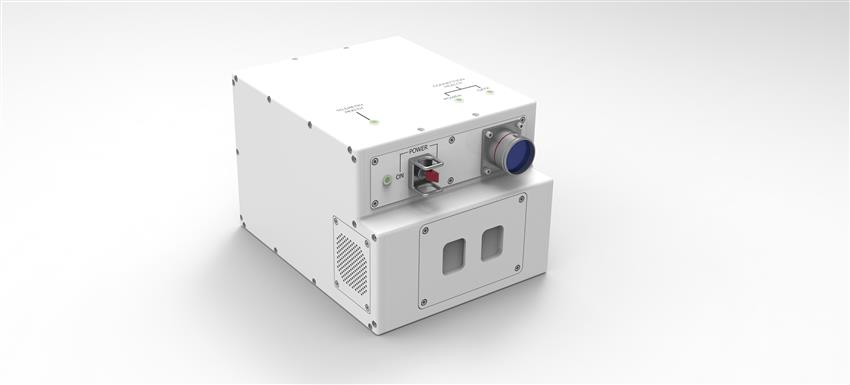
Preliminary design for CANS. (Credit: Bubble Technology Industries)