
Speakers' kit – Artemis II: mission to the Moon
Resources that experts can use to deliver presentations about about the Artemis II mission to audiences across Canada.
Presentation
Artemis II: mission to the Moon
- Thank you for having me here today. I'm excited to speak about the Artemis II mission – the first crewed flight to the Moon in over 50 years.
- Like the Apollo program over half a century ago, the Artemis campaign is enabling humans to again explore the Moon – our planet's only natural satellite.
- Equipped with the knowledge and expertise gained from 25 years of human presence aboard the International Space Station, now we venture 1,000 times farther, to the Moon – to establish a lunar presence in a sustainable way, and to explore deeper into space than ever before.
- Artemis is the start of a new era of lunar exploration, where dreamers and do-ers unite to make the impossible happen. Welcome aboard!
Text version: Artemis II: mission around the Moon
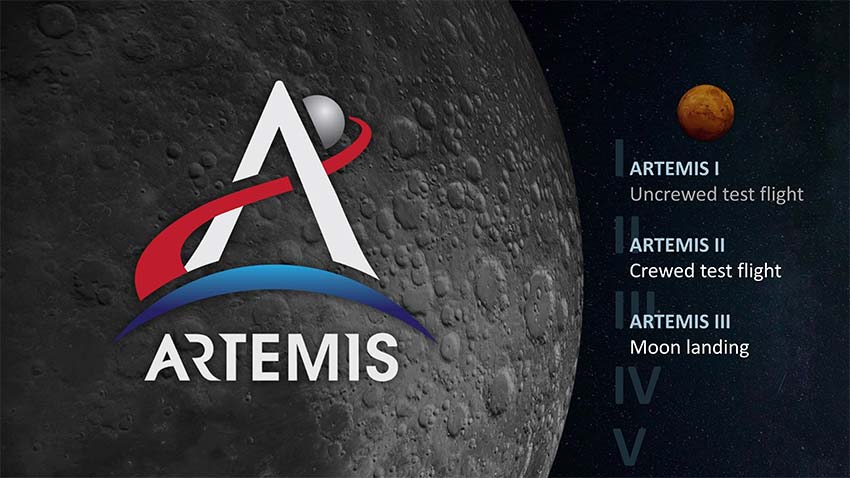
A new era of lunar exploration
- The Artemis campaign is humanity's ambitious return to the Moon, and it is designed to take a step-by-step approach to lunar exploration.
- Artemis II tested the Orion spacecraft's systems, adapted to meet the needs of a crew on board.
- The mission marked a critical step towards future Artemis missions.
- For the first time since , astronauts will again venture onto the lunar surface.
Text version: Artemis missions. Artemis I: an uncrewed test flight; Artemis II: a crewed test flight; Artemis III: tests in low Earth orbit; Artemis IV: Moon landing.
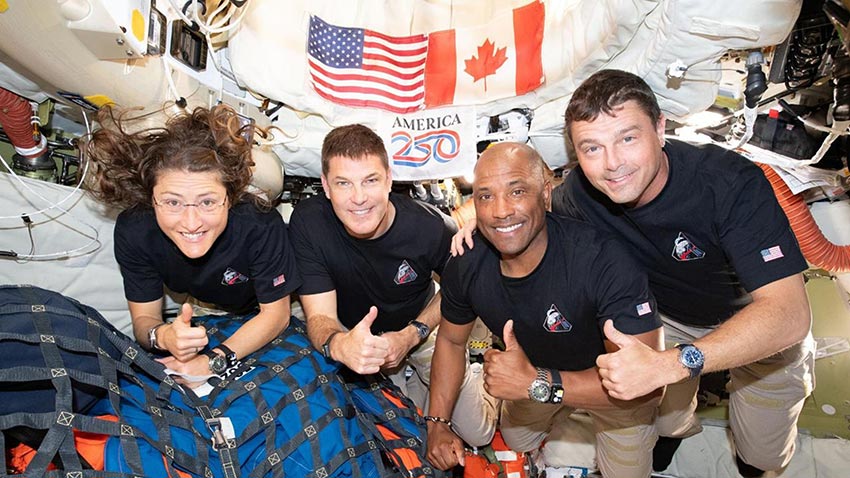
Teamwork makes the dream work
- Canadian Space Agency (CSA) astronaut Jeremy Hansen joined NASA astronauts Reid Wiseman, Victor Glover, and Christina Koch on a nearly 10-day journey around the Moon in .
- Canada earned its spot on the Artemis II crew through decades of contributions and strategic investments, particularly in space robotics, where Canadian expertise has played an instrumental role in advancing space exploration.
Credit: NASA
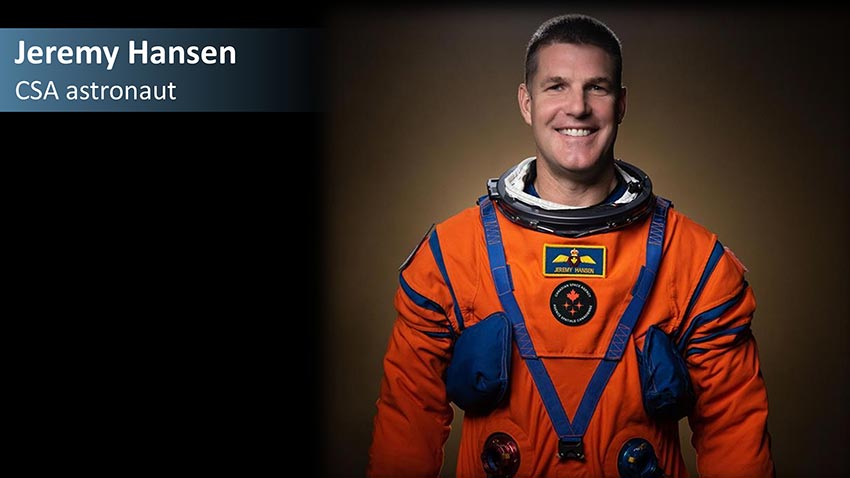
A first for Canada
- CSA astronaut Jeremy Hansen was the first Canadian to fly around the Moon.
- His historic mission made Canada the second country to send an astronaut on a lunar mission.
- Before them, only 24 people have seen Earth or the "blue marble" from a lunar vantage point.
Text version: Jeremy Hansen, CSA astronaut. (Credit: NASA)

Ensuring a seat for Canada
- CSA astronaut Jenni Gibbons was Jeremy's backup for Artemis II.
- Assigning Jenni as the official backup ensured that Canada would keep its seat on this historic mission in the event that Jeremy Hansen was unable to fly.
- Jenni was fully integrated into the training and flight-testing flow alongside the Artemis II crew and played a key role in defining and validating astronaut training and processes for future lunar missions.
- She assisted the crew from ground control in Houston as an Artemis capcom (capsule communicator) throughout the mission, including during the lunar flyby – a first for Canada.
- Jenni was an Astronaut Support Person as well, helping prepare Orion for the crew right before the launch, and she was the immediate family escort to Jeremy's family.
Credit: NASA/Bill Stafford

Training (1/2)
- To prepare for their time in space, the Artemis II crew trained for nearly three years.
- Most of the training takes place at NASA's Johnson Space Center in Houston, Texas. There, they learned to use the Orion simulator and interacted with a mock-up of the spacecraft (pictured).
- At NASA's Kennedy Space Center in Florida, the crew learned about the SLS rocket and launchpad and countdown operations.
- They also learned to operate and monitor systems of the Orion spacecraft and rocket for every phase of the mission: from launch and flying to the Moon, to re-entering Earth's atmosphere and splashdown.
Credit: NASA/James Blair
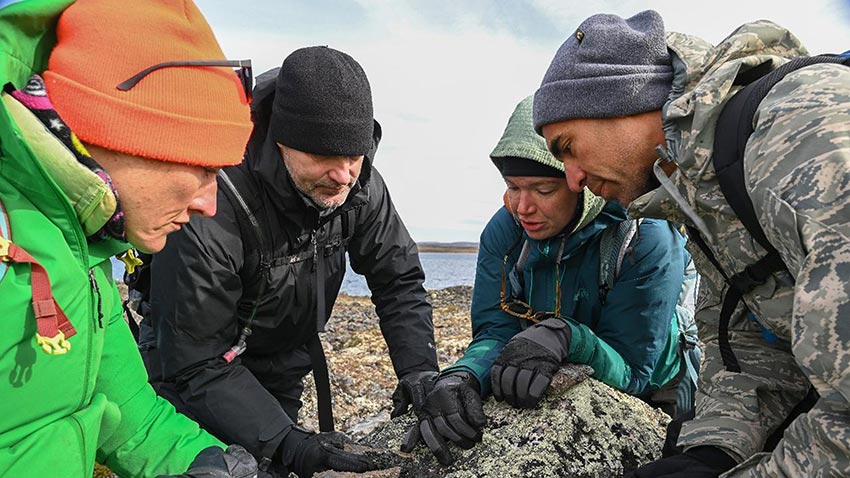
Training (2/2)
- Further training included emergency preparedness, water survival, and lunar fundamentals courses in geology – including in Canada's northern Labrador – and lunar sciences.
- Additional phases of training were designed to prepare the crew for living aboard a new vehicle. Orion is only about the size of a camper van, so the crew needed to live and work in limited quarters. They trained to conduct daily operations, prepare food, exercise using a flywheel, and operate the various life-support systems and habitation equipment.
Credit: CSA
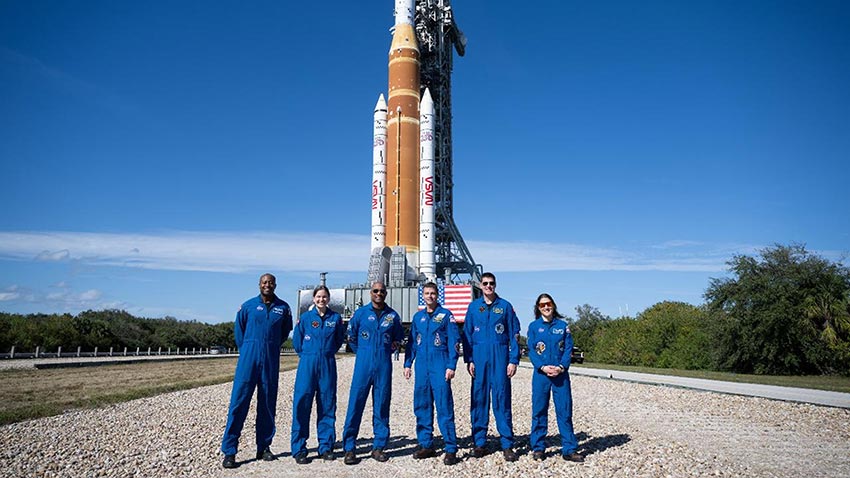
Sweet ride!
- The Artemis II mission blasted off from NASA's Kennedy Space Center in Florida.
- The Orion spacecraft launched atop the SLS, one of the most powerful rockets in the world.
- During the uncrewed Artemis I test flight, the Orion crew module did not contain the life-support systems required for crewed missions. Orion and its European Service Module were outfitted with these systems for Artemis II and future missions.
- Fully testing all of Orion's systems with crew on board was a main objective of the Artemis II mission.
Credit: NASA/ Joel Kowsky
Relive the Artemis II mission
- Let's take a look back at the incredible journey of the Artemis II crew.
- Travelling over a million kilometres to the Moon and back, CSA astronaut Jeremy Hansen and NASA astronauts Christina Koch, Victor Glover and Reid Wiseman captivated the world with their historic flight.
Credit: CSA, NASA
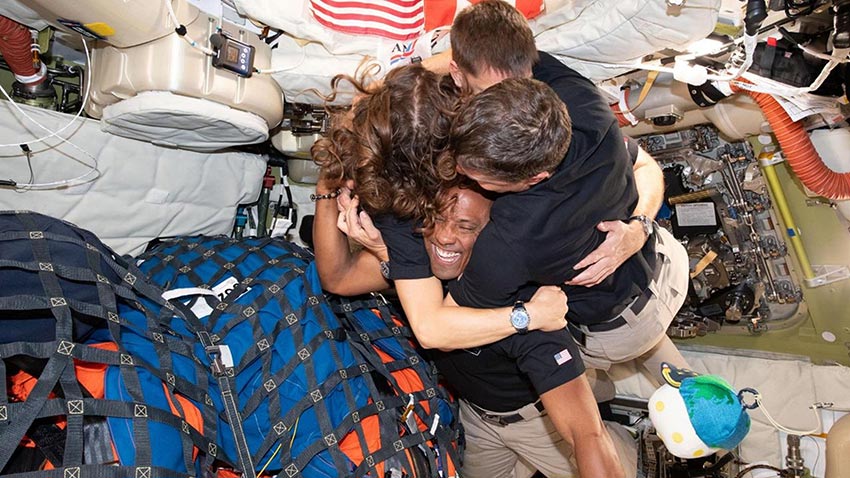
Moon joy
- The Artemis II mission ignited a viral sense of wonder about space exploration, reminding people around the world that exploring space is a deeply human endeavour. The mission generated enthusiasm and optimism that extended well beyond the space community.
- The widespread "Moon joy" sparked by Artemis II has inspired a new generation to dream bigger and see themselves as part of the future of exploration. The reaction also shows the power of ambitious space exploration to unite, inspire, and foster international pride.
- That positive public engagement is an important foundation for sustaining future missions and the long-term vision of human exploration into deep space.
Credit: NASA
Gearing up for deep-space exploration
- These are exciting times for Canada!
- This renewed era of lunar exploration provides opportunities for Canadian companies and researchers, who are ready to take advantage of this international effort by contributing smart innovations, cutting edge technologies, and world-leading science.
- Building on decades of leadership and proven expertise in space robotics, Canada is well positioned to deliver systems that support exploration on the surface of the Moon.
- These upcoming missions to new destinations will also continue to inspire young Canadians to reach for the stars and become the next generation of scientists, engineers, and explorers.
Credit: NASA
End – CSA website and social media
To stay up to date on Canada's role in going back to the Moon, visit the CSA's website and follow us and Jeremy on social media.
Text version: Follow us on social media. Suivez-nous dans les médias sociaux. asc-csa.gc.ca
(Credits: CSA, NASA)