
Fascinating news about Bennu
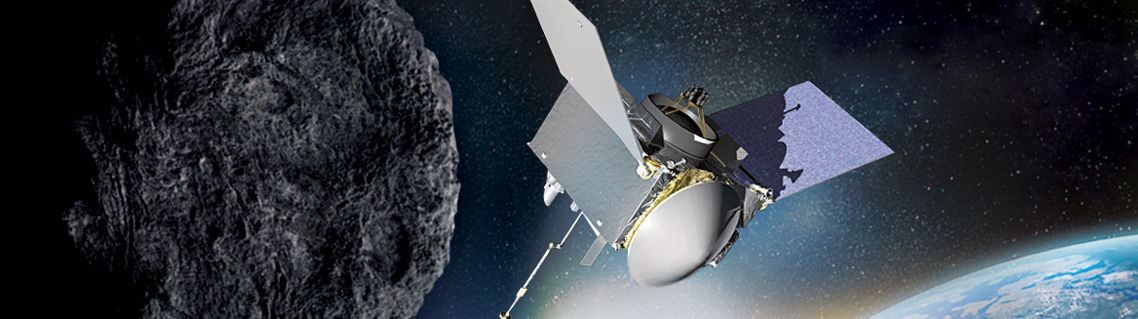
NASA's OSIRIS-REx mission is continuing to make news almost two years after a sample collected from asteroid Bennu was delivered to Earth. In , early analyses of the sample confirmed that Bennu is rich in carbon, nitrogen and organic compounds – essential components for life as we know it. And now, three scientific papers recently published in Nature Astronomy and Nature Geoscience are offering insights into the origins and composition of Bennu. Canadian researchers on the OSIRIS-REx international science team contributed to these studies.
The research suggests that Bennu is made of fragments from a larger parent asteroid destroyed by a collision in the asteroid belt, between the orbits of Mars and Jupiter. This asteroid likely formed in the outer solar system (farther from the Sun than Jupiter) from material that originated in diverse locations: near the Sun, the outer solar system and even beyond our solar system. Despite very low odds and despite its tumultuous evolution, some of its materials retained their initial state. Analyses of the Bennu sample have indicated the presence of:
- stardust grains with compositions that predate the solar system;
- organic matter that likely formed in interstellar space, beyond our solar system, and;
- high-temperature minerals that formed closer to the Sun.

As astonishing as this is, the fact is that most of Bennu's materials were transformed by exposure to the harsh space environment and interactions with water. Bennu's ancestor probably formed through the accumulation of dust and ice in the outer solar system. At one point, the ice melted and caused certain minerals to transform. This process is what would have formed most of the minerals containing water in the sample of Bennu.
The studies also showed the presence of microscopic craters and tiny splashes of once-molten rock on the sample surfaces; a sign that Bennu was bombarded by micrometeorites. These impacts, together with the effects of solar wind, are known as space weathering. This process affects almost all bodies in the solar system. The Bennu sample allows us to better understand this process by seeing its effects up close.
This new research demonstrates the importance of asteroid sample-return missions like OSIRIS-REx. A Canadian lidar instrument was used to help select the Bennu sample site. In exchange for this contribution, Canada will receive 4% (about 4.9 g) of the sample, which will be curated at Canadian Space Agency headquarters.
More information, read the NASA's Bennu Samples Reveal Complex Origins, Dramatic Transformation article.