
History of the Canadian astronaut corps
In 1974, NASA sought out Canadian expertise for the development of a robotic arm, the famous Canadarm. That marked the beginning of a close collaboration between Canada and the United States in human space flight.
Not long after, NASA invited a Canadian astronaut to participate in a space mission. That invitation led to the creation of the first team of Canadian astronauts in 1983.
In total, Canada has recruited 14 astronauts through four campaigns, and 9 of those exceptional people have participated in 17 space missions.

Learn more about the milestones in the Canadian space adventure!
First astronaut recruitment campaign
More than 4,000 people responded to the call for astronauts in 1983.

The Canadian astronauts selected in 1983. Back row, from left to right: Ken Money, Marc Garneau, Steve MacLean and Bjarni Tryggvason. Front row: Robert Thirsk and Roberta Bondar. (Credit: Canadian Space Agency [CSA])
After a rigorous hiring period, the following people were selected based on their exceptional academic backgrounds, professional experience, health, and communication skills:
Second astronaut recruitment campaign
In 1992, the CSA announced that it would recruit four more individuals to undergo astronaut training. Over 5,000 Canadians applied.
After a six-month selection process, four candidates were selected:

The four Canadian recruits in 1992. Back row, from left to right: Chris Hadfield, Dave Williams. Front row: Michael McKay, Julie Payette. (Credit: NASA)
Third astronaut recruitment campaign
In March 2008, after some of Canada's seasoned astronauts had retired, the time had come to recruit new members: the CSA launched a new recruitment campaign.
Once again, a large number of Canadians responded: over 5,000 applications were received.
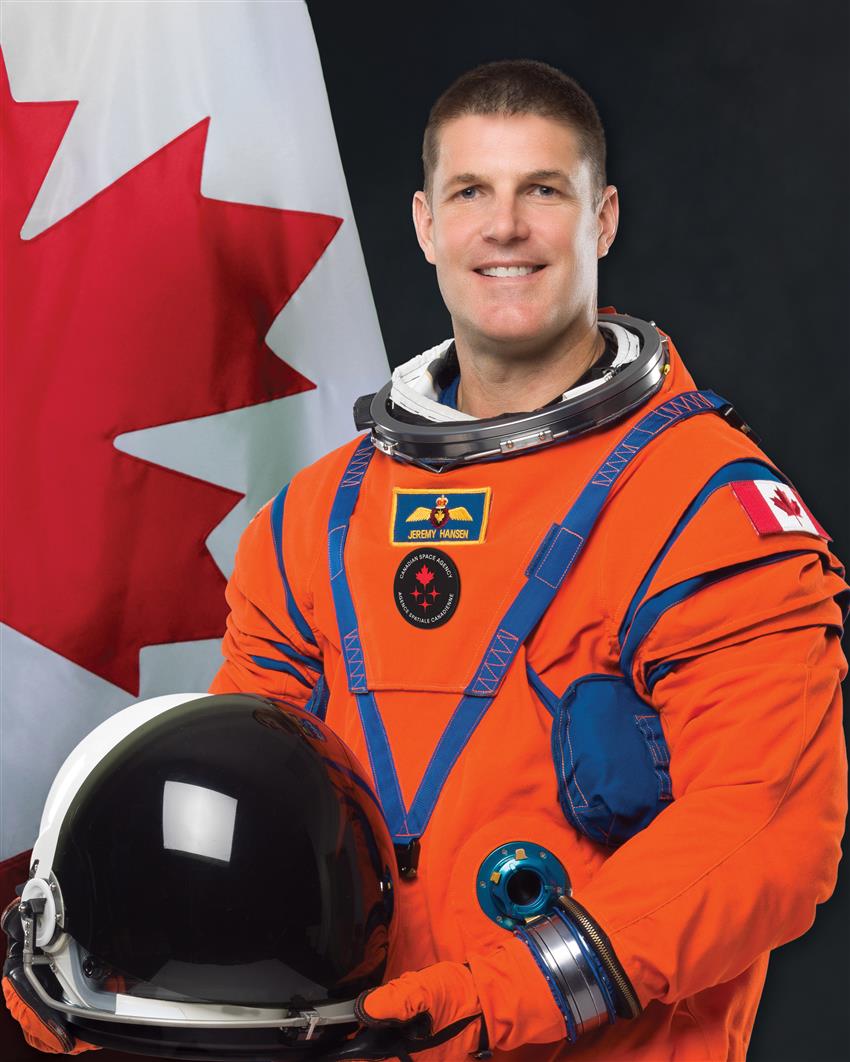
Official photo of CSA astronaut Jeremy Hansen. (Credit: CSA)
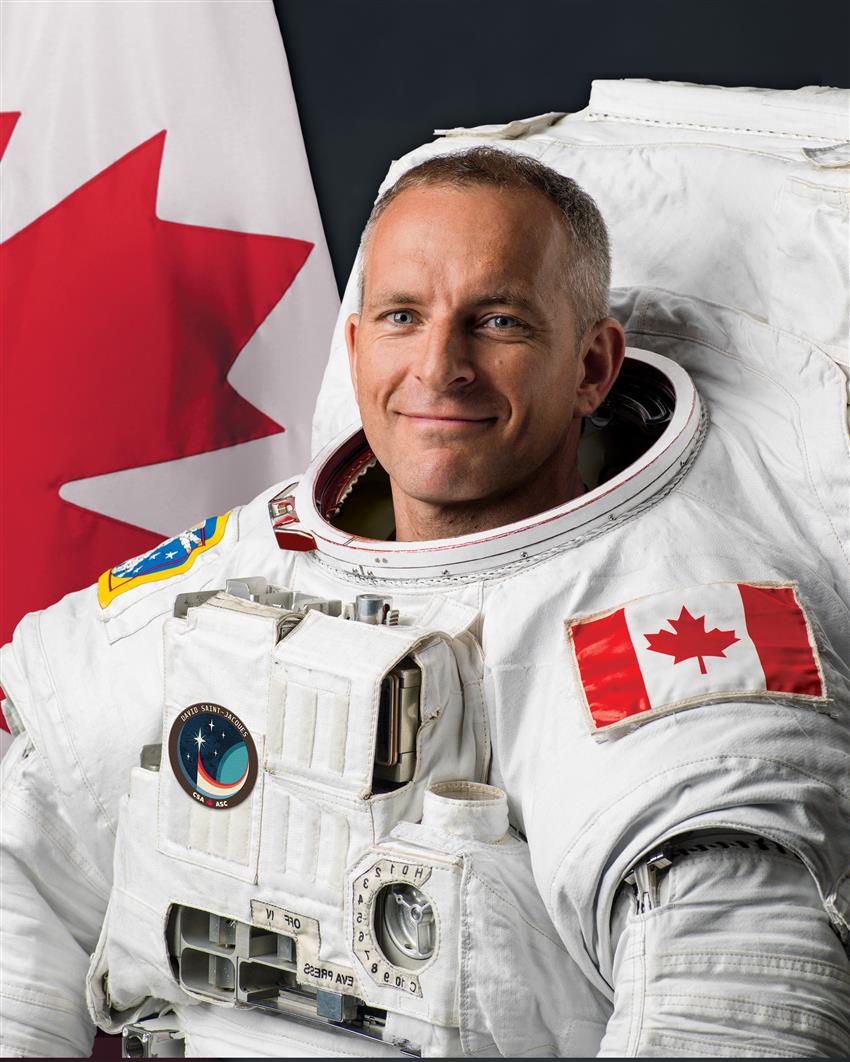
Official photo of CSA astronaut David Saint-Jacques. (Credit: CSA)
After a lengthy selection process that took about a year, Jeremy Hansen and David Saint-Jacques were chosen in May 2009.
In , Jeremy Hansen became the first Canadian to be entrusted with leading a NASA astronaut class.
David Saint-Jacques flew to the International Space Station on , as a crewmember of Expedition 58. He spent 204 days in space, the longest Canadian space mission to date.
In , Jeremy Hansen was assigned to the Artemis II mission, the first crewed flight test of the Orion spacecraft launching on the SLS rocket. He will be the first Canadian to ever participate in a lunar mission.
Fourth astronaut recruitment campaign
In , the CSA announced its fourth astronaut recruitment campaign, and 3,772 people from all provinces and territories applied.
After a year of demanding tests and evaluations, two candidates were selected in to become the new Canadian astronauts:

The two Canadian recruits in . Left: Joshua Kutryk. Right: Jenni Gibbons. (Credit: CSA)
In , the two recruits started their two-year basic training at the Johnson Space Center in Houston, Texas.
Joshua and Jenni completed the Astronaut Candidate Training Program and obtained the official title of astronaut in .
In , Jenni was announced as the backup crewmember for CSA astronaut Jeremy Hansen on the Artemis II mission.
The same year, Joshua Kutryk was assigned to a mission to the International Space Station, where he will live and work for approximately six months. This will be the first mission by a CSA astronaut under NASA's Commercial Crew Program.
Life after space
Retired astronauts don't necessarily stop working! They generally pursue professional activities in line with their expertise.
For example, they can:
- work in academia, the medical field, or another area of activity in astronautics;
- speak at schools;
- contribute actively to science.
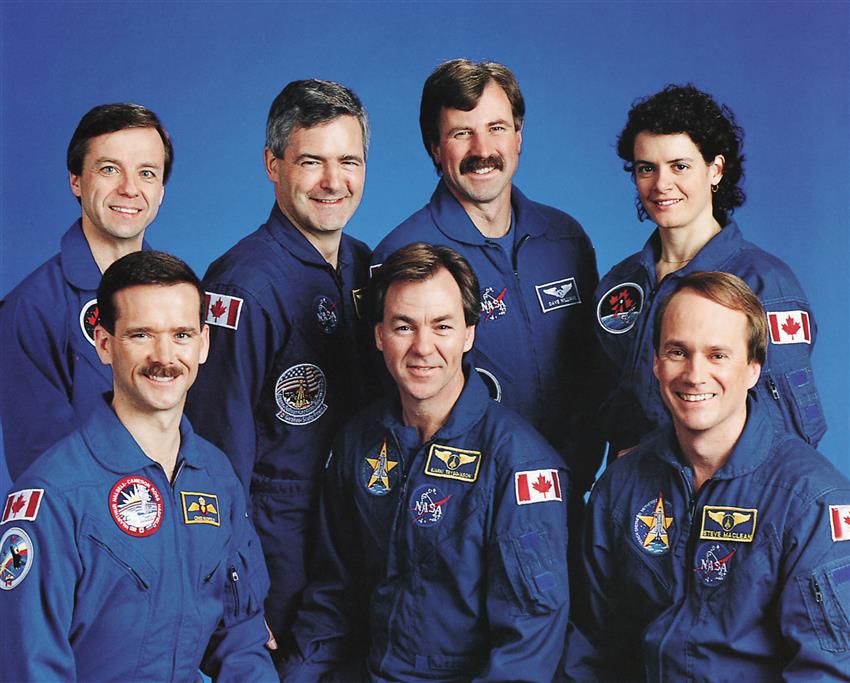
Back row, from left to right: Robert Thirsk, Marc Garneau, Dave Williams and Julie Payette. Front row, from left to right: Chris Hadfield, Bjarni Tryggvason and Steve MacLean. (Credit: CSA)
Find out more about our retired Canadian astronauts and their careers.