By: Dr. Roberta Bondar
Lake Natron, in northeastern Tanzania near the Kenyan border, is an example of a soda lake – a very salty lake that was once full of fresh water. So how does a lake like this form if it's not the result of seawater?
In a hot land with little rainfall, large shallow lakes can become very salty as water evaporates. The evaporation process leaves behind extremely high concentrations of minerals like sodium chloride, the type of salt used in our food, and sodium carbonate, also known as soda. This is why these bodies of water are called soda lakes, and it's what makes them very alkaline. The minerals come from rocks under and around the lake that are rich in sodium, as well as the river water and mineral hot springs that feed the lake.
Despite these extreme conditions of heat and salt, over 2.5 million Lesser Flamingos, about 75% of the world's population, breed and nest along mud flats and near small islands on Lake Natron.
Videos
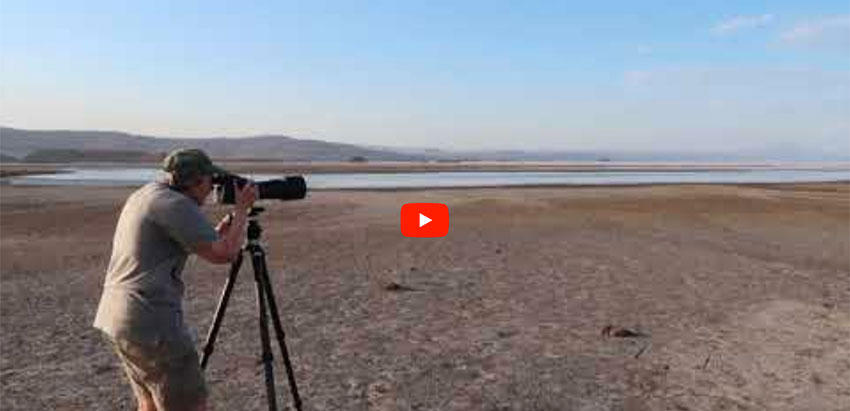
Watch this video to learn about the Lesser Flamingo breeding and nesting habitat in Lake Natron, Tanzania. (Credit: The Roberta Bondar Foundation)
Did you know?
Predators have a lot of difficulty crossing the hot, caustic water of Lake Natron since the water can damage animal skin. Lesser Flamingo legs are tough and can withstand the dangerous water of Lake Natron. This means they can build their nests safely away from predators, and feed on the micro-organisms in the water that give the Lesser Flamingo its pink colour. Because it relies on such a limited and special area for breeding and nesting, the International Union for the Conservation of Nature (IUCN) lists the Lesser Flamingo as threathened. Any change in the water of Lake Natron would impact the food available and, consequently, the safety of the Lesser Flamingo.
An out-of-this-world view!
Lake Natron is remarkable from space. It stands out because of the red pigment from masses of micro-organisms on the salt-encrusted surface of the lake. This is especially impressive in the dry season when the colours are concentrated.
Fun fact!
Lesser Flamingos like to stand on one leg. According to scientists, it seems that when standing for a long time, one leg is more stable and uses less energy than standing on two legs, which would require contracting more muscles.