By: Dr. Roberta Bondar
The Rift Valley of East Africa is a geological feature that formed a long time ago in the northern part of what is now Ethiopia and runs some 3,500 kilometres southward to Mozambique from the Red Sea. The valley exists because this area of the lithosphere, which is another name for the underlying crust and upper part of the mantle of our planet, is being stretched apart slowly in opposite directions in a process called "rifting." Over time, the stretching of these areas can lead to volcanic activity, the creation of mountain chains and other geological features including rift valleys.
Within the Eastern Rift Valley there are fourteen endorheic lakes. Endorheic lakes are lakes that do not drain into another body of water such as a river or an ocean. These lakes are all different from one another because of the amount of salt they contain. The majority of these lakes, including the Bogoria, Elmenteita and Nakuru Lakes, are saltwater; only two lakes (Lakes Baringo and Naivasha) are freshwater. These lakes are biodiversity hotspots and are visited by numerous mammal and bird species, including the Lesser Flamingo.
Videos
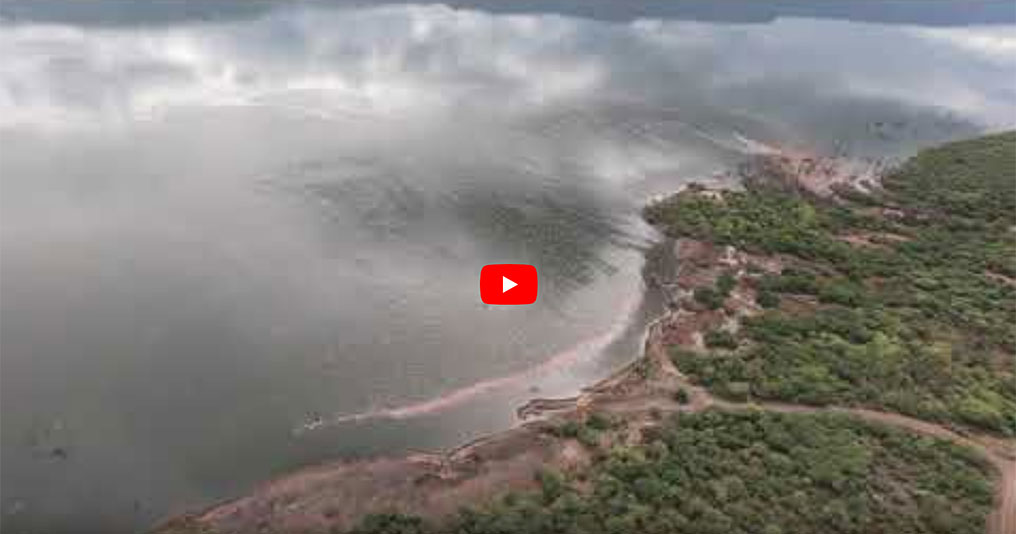
Watch this video to learn about the Lesser Flamingo habitat near Lake Bogoria, Kenya. (Credit: Roberta Bondar Foundation)
Did you know?
The Lesser Flamingo migrates to different places in Africa and can live up to 40 to 50 years or more in the wild. Their movements are not predictable but they seem to move from one lake to another depending on the availability of food. In recent years, more incoming fresh water has been raising the water levels of Lake Bogoria and Nakuru which dilutes the salt concentration in these lakes and reduces the amount of food available for the Lesser Flamingo. However, these birds still require freshwater for drinking, which they normally find in nearby springs.
An out-of-this-world view!
The Rift Valley lakes are readily identifiable from space and span the valley from north to south. By monitoring the valley with satellites, scientists can track changes in surface structure and geology, observe yearly fluctuations in lake water levels and temperatures, and search for natural oil deposits.
Fun fact!
The Lesser Flamingo eats upside down and has a lower jaw that holds air and allows the jaw to float. The Lesser Flamingo diet is mostly based on a special kind of micro-organism called cyanobacteria. While there are many kinds of cyanobacteria, Lesser Flamingos like one specific kind called spirulina (Arthrospira fusiformis) which grows best in salty, alkaline water. To separate food from water and to help it swallow, the Lesser Flamingo uses its fleshy tongue like a pump to push water through its bill up to 20 times a second.